


Drinking More Water With Meals May Increase Food Intake, Study Finds
Translated from Korean, summarized and contextualized by DistantNews.
At a glance
News
Documents & data
Outcome reported
- Contrary to popular advice, a new study suggests drinking more water with meals may lead to increased food and calorie intake.
- Researchers analyzed data from 86 adults, finding that participants consumed more food and calories when they drank more water during lunch.
- The study, published in the journal 'Appetite', challenges the notion that water intake before or during meals inherently reduces consumption.
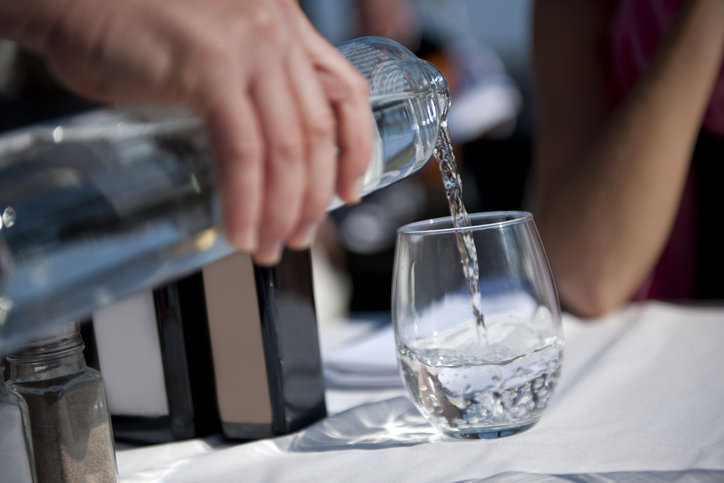
The common advice to drink water with meals to curb appetite may be counterproductive, according to a joint study by Cornell University and Pennsylvania State University. Researchers found that individuals who consumed more water during lunch actually ate more food and calories, challenging the widely held belief that water intake automatically leads to reduced consumption.
The study, published in the international journal 'Appetite', analyzed data from 86 adults who participated in two separate lunch experiments. Participants were filmed eating their meals, and their food and water intake was meticulously recorded. The analysis broke down the mealtime into seconds, noting every instance of food entering the mouth and water being consumed.
Participants drank about 236g (1 cup) of water in about 10 sips.
On average, participants drank about 236 grams (approximately one cup) of water in about 10 sips during their lunch. They repeated the action of drinking water while eating eight to nine times. The findings revealed a direct correlation: for every additional 100 grams of water consumed, participants ate approximately 39 grams more food, translating to an additional 49 calories. This suggests that the physical act of drinking water might stimulate appetite rather than suppress it for some individuals.
For every additional 100g of water consumed, participants ate about 39g more food, and 49 calories more.
DistantNews Editorial
Originally published by Dong-A Ilbo in Korean. Translated, summarized, and contextualized by our editorial team with added local perspective. Read our editorial standards.
More Stories


From Our Blog

What Gets Lost (and Found) When News Is Translated

The Critical Role of Diaspora Media in Global News

What Travellers Should Know About Countries with Restricted Press

A Digital Nomad's Guide to Following Local News

How the Same Story Looks Different in Different Countries
