


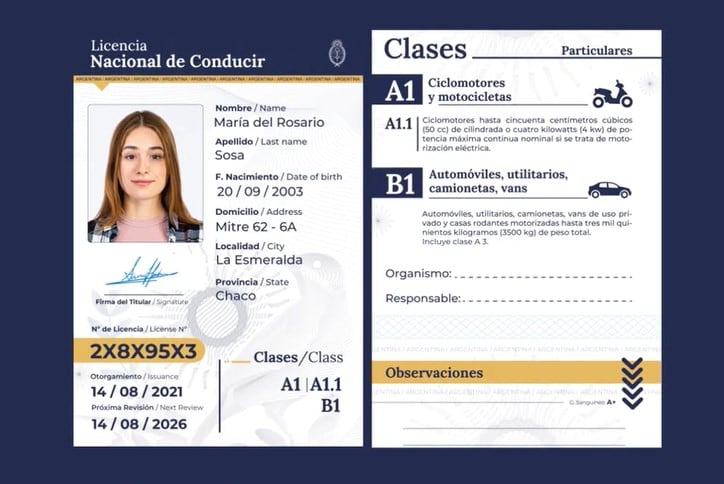
Driver's License at 17: Which Provinces Allow It and What Requirements They Ask for in 2026
Translated from Spanish, summarized and contextualized by DistantNews.
TLDR
- Argentina's national traffic law allows for obtaining a driver's license at 17, but implementation varies by province.
- Most provinces permit 17-year-olds to apply with legal authorization, while some maintain the minimum age of 18 for private vehicles.
- Key requirements include parental or legal guardian consent and passing mandatory exams, with specific procedures differing across regions.
As La Nación, we provide clarity on the nuanced regulations surrounding driver's licenses for 17-year-olds across Argentina. While national law permits this possibility, the practical application is a patchwork of provincial rules, creating a heterogeneous landscape for aspiring young drivers.
Our analysis reveals that the majority of provinces, including Buenos Aires, Catamarca, Chaco, Córdoba, Corrientes, Entre Ríos, Formosa, Jujuy, La Pampa, La Rioja, Misiones, Neuquén, Río Negro, Salta, Santa Cruz, Tierra del Fuego, and Tucumán, allow 17-year-olds to obtain licenses for private cars and low-cylinder motorcycles, provided they have explicit authorization from their legal representatives and pass the required tests. The City of Buenos Aires also follows this, with a specific regime for minors that requires parental consent, renewable until the holder reaches the age of majority.
However, a significant contrast emerges in Santa Fe and Mendoza, where the minimum age remains strictly 18 for private vehicles, regardless of parental consent. Other provinces, like Chubut, San Juan, and San Luis, present a less uniform picture, with varying criteria depending on the specific licensing office or municipality. This highlights the importance of verifying local regulations before initiating the application process.
From an Argentine perspective, this variation reflects the federal nature of our country, where provinces retain significant autonomy in implementing national laws. While the goal is to standardize road safety and accessibility, local conditions and priorities shape these regulations. The requirement for legal authorization, often needing notarization or certification by a justice of the peace, underscores the emphasis placed on parental responsibility in this process, a value deeply ingrained in our societal norms.
DistantNews Editorial
Originally published by La Nación in Spanish. Translated, summarized, and contextualized by our editorial team with added local perspective. Read our editorial standards.
More Stories



From Our Blog

What Gets Lost (and Found) When News Is Translated

The Critical Role of Diaspora Media in Global News

What Travellers Should Know About Countries with Restricted Press

A Digital Nomad's Guide to Following Local News

How the Same Story Looks Different in Different Countries
