

Dulce de Leche: The Popular Latin American Treat and How to Make It
Translated from Turkish, summarized and contextualized by DistantNews.
At a glance
In-depth
Sources not specified
Context piece
- Dulce de leche, a popular Latin American caramel sauce, is made by slowly simmering milk and sugar.
- Unlike traditional caramel, its flavor and color come from the Maillard reaction between milk proteins and sugar.
- The article provides a recipe for making dulce de leche at home, detailing ingredients and step-by-step instructions.
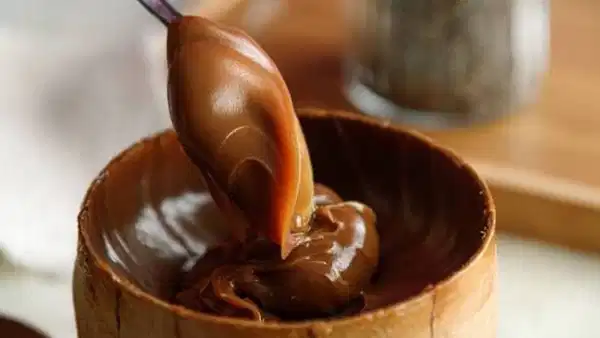
Dulce de leche, a beloved staple across South America, particularly in Argentina and Uruguay, is a testament to the magic of slow cooking. This iconic Latin American classic is crafted by simmering milk and sugar with a touch of baking soda over very low heat for hours. The process evaporates the water content, leaving behind a rich, velvety, caramel-colored sauce.
While its appearance might resemble familiar caramel sauce, dulce de leche's creation relies on a different chemical process. Traditional caramel is made by directly melting and burning sugar (caramelization). Dulce de leche, however, derives its distinct flavor and deep color from the Maillard reaction – a complex interaction between milk proteins and sugar amino acids when exposed to heat.
The recipe calls for 1 liter of whole milk, approximately 250 grams of sugar, 1 teaspoon of baking soda, and optional vanilla. The milk and sugar are heated until the sugar dissolves, then brought to a boil before the baking soda is added, causing the mixture to foam. After stirring to calm the foam, the mixture is simmered on the lowest heat for about 1.5 to 2 hours. Constant stirring is crucial, especially in the final stages, to prevent sticking and burning. The sauce is ready when it thickens to a consistency similar to boza or a fluid pudding, knowing it will solidify further upon cooling.
DistantNews Editorial
Originally published by Cumhuriyet in Turkish. Translated, summarized, and contextualized by our editorial team with added local perspective. Read our editorial standards.
More Stories

From Our Blog

What Gets Lost (and Found) When News Is Translated

The Critical Role of Diaspora Media in Global News

What Travellers Should Know About Countries with Restricted Press

A Digital Nomad's Guide to Following Local News

How the Same Story Looks Different in Different Countries
