


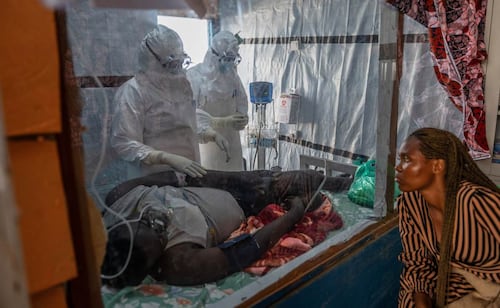
Ebola Cases in DRC Could Be Four Times Higher Than Calculated: WHO
Translated from Spanish, summarized and contextualized by DistantNews.
At a glance
News
Sources not specified
Ongoing story
- The World Health Organization estimates that actual Ebola cases in the Democratic Republic of Congo could be two to four times higher than officially recorded.
- The ongoing outbreak is the third largest and fastest-progressing Ebola epidemic recorded.
- WHO urges faster detection, intensified contact tracing, and accessible, trusted health centers to combat the epidemic.
The World Health Organization (WHO) has indicated that the number of Ebola cases in the Democratic Republic of Congo (DRC) may be significantly underestimated, potentially ranging from two to four times the officially reported figures. This warning comes as the epidemic continues to spread.
According to our projections, we estimate that the magnitude of the epidemic represents at least two to four times the number of registered cases.
Chikwe Ihekweazu, executive director of the WHO's Health Emergencies Programme, stated that projections suggest the epidemic's true scale is at least double, and possibly quadruple, the number of registered cases. Official figures from the DRC indicate over 1,960 infections and more than 700 deaths since the outbreak was declared in mid-May. The virus, initially detected in the northeastern Ituri province, has now spread to neighboring regions within the DRC and has also been reported in Uganda, with 20 cases there.
Ihekweazu described the current outbreak as the third largest Ebola epidemic ever recorded and noted its rapid progression within a single month, surpassing previous outbreaks managed by the WHO. Despite a contact tracing rate of nearly 80%, he expressed concern that the epidemic is outpacing the response efforts of local authorities and international partners.
This is already the third most important Ebola outbreak ever recorded, and the one that has experienced the fastest progression in a single month, among all that we have managed.
To effectively manage the situation, Ihekweazu emphasized the need for earlier case detection, accelerated contact tracing, and ensuring that health centers are accessible, safe, and trusted by the communities they serve. The WHO's warning highlights the challenges in containing the outbreak and the critical need for enhanced surveillance and response mechanisms.
We must detect cases earlier. We must strengthen and accelerate contact tracing. We must ensure that health centers are accessible, safe, and worthy of the trust of the communities they serve.
DistantNews Editorial
Originally published by El Universal in Spanish. Translated, summarized, and contextualized by our editorial team with added local perspective. Read our editorial standards.
More Stories

From Our Blog

What Press Freedom Means for the News You Read

What Gets Lost (and Found) When News Is Translated

The Critical Role of Diaspora Media in Global News

What Travellers Should Know About Countries with Restricted Press

A Digital Nomad's Guide to Following Local News
