


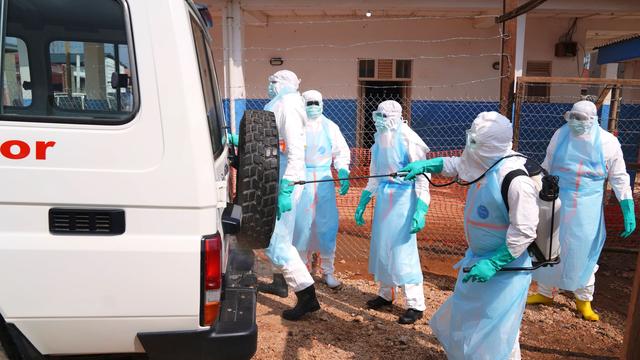
Ebola outbreak in Congo worsens, WHO struggles for control
Translated from German, summarized and contextualized by DistantNews.
At a glance
News
Sources not specified
Ongoing story
- The WHO is struggling to control an Ebola outbreak in the Democratic Republic of Congo, which is worsening and poses a growing risk to neighboring countries.
- The current outbreak is the largest the DRC has ever experienced, with record numbers of infections and deaths reported in a single week.
- Difficult security conditions, widespread mistrust, and low patient engagement with treatment centers hinder control efforts, while a specific variant lacks a licensed vaccine.
The World Health Organization (WHO) faces a worsening Ebola outbreak in the Democratic Republic of Congo, warning of increased risk to neighboring nations. This outbreak has become the largest the DRC has ever recorded, with recent weekly figures showing a record 567 infections and 296 deaths. The WHO stated that a significant expansion of control measures is urgently needed.
Despite weeks of effort, the WHO reports a total of 3,605 confirmed cases, including 1,587 deaths and 651 survivors. While improved surveillance and testing contribute to higher numbers, the primary driver is the outbreak's spread. Crucially, only about 80 percent of contacts of infected individuals are monitored for three weeks, falling short of the 95 percent specialists deem necessary.
Control efforts are severely hampered by a complex security situation, marked by rebel conflicts and hundreds of thousands of displaced people, fostering deep mistrust among the population. Experts believe the actual number of infections far exceeds confirmed cases, as many affected individuals do not reach treatment centers. Families often misdiagnose deaths, and traditional burial practices pose a high risk of transmission.
This outbreak involves the Bundibugyo variant, for which no licensed vaccine currently exists, although a trial for a new vaccine is underway. Local researchers suggest the outbreak may have begun as early as January, with the epidemic only being officially declared in mid-May. The situation is compounded by the fact that many affected individuals are not brought to treatment centers, and relatives often assume deaths are due to other illnesses.
DistantNews Editorial
Originally published by Die Zeit in German. Translated, summarized, and contextualized by our editorial team with added local perspective. Read our editorial standards.
More Stories

From Our Blog

What Gets Lost (and Found) When News Is Translated

How the Same Story Looks Different in Different Countries

The Critical Role of Diaspora Media in Global News

What Travellers Should Know About Countries with Restricted Press

A Digital Nomad's Guide to Following Local News
