


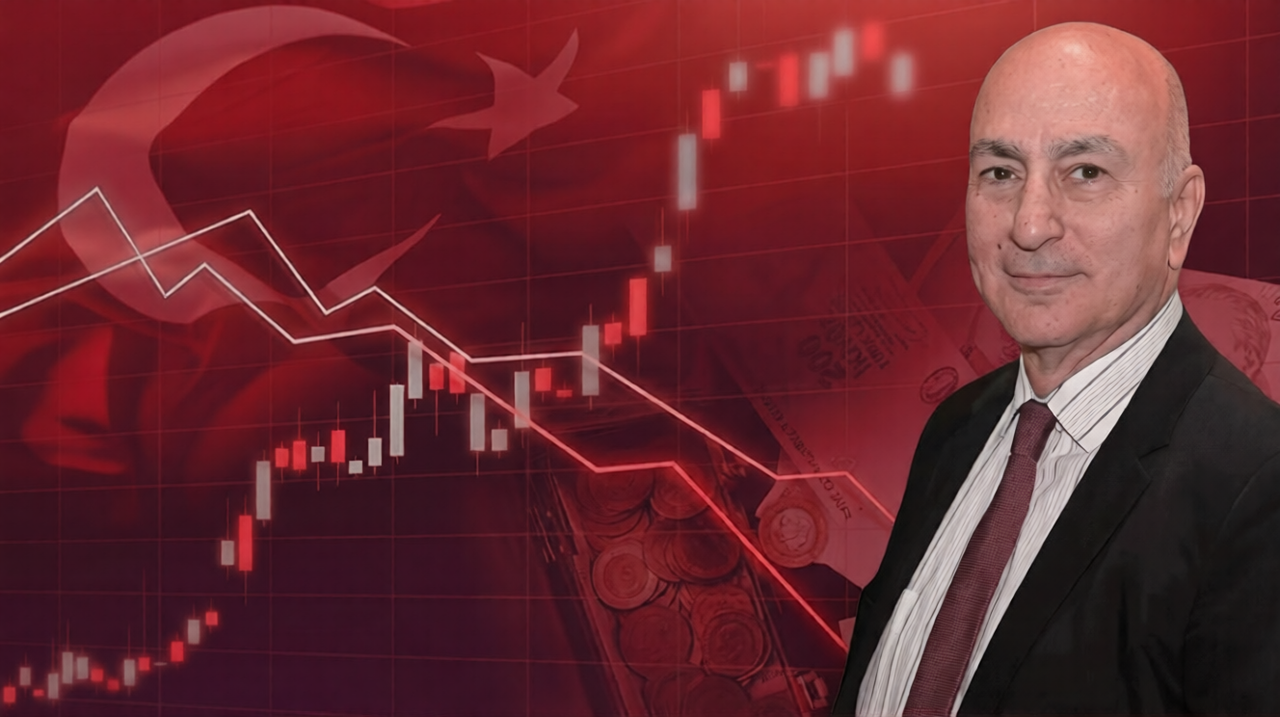
Economist Mahfi Eğilmez on Turkey's First Quarter: 'Not Very Good, But...'
Translated from Turkish, summarized and contextualized by DistantNews.
At a glance
News
Sources not specified
Context piece
- Turkey's economy grew 2.5% in the first quarter of 2026, with agriculture recovering but industry contracting.
- Economist Mahfi Eğilmez noted that consumption-driven growth fuels inflation, creating a vicious cycle.
- Eğilmez forecasts around 3% growth for the full year, citing global economic slowdown and rising trade barriers.
Turkey's economy expanded by 2.5% in the first quarter of 2026, a figure economist Mahfi Eğilmez described as "not very good, but not dire." While the agricultural sector showed signs of recovery, growing by 4.6%, the industrial sector contracted by 0.8%. This industrial slowdown is a significant concern, as it impacts related service and trade sectors.
2.5% is not a very good result, but it is not a dire result.
Eğilmez highlighted that Turkey's growth is largely driven by consumption, which is further fueled by high inflation. "When there is inflation, consumption also increases. People buy two instead of one. There is such artificial demand," he explained. This cycle, where rising prices spur demand and thus more inflation, is a key challenge for the Turkish economy.
Turkey's main growth comes from consumption. When there is inflation, consumption also increases. People buy two instead of one. There is such artificial demand. This demand also creates inflation. It develops in a vicious cycle that feeds itself.
Looking ahead, international organizations like the OECD and EBRD have revised their growth forecasts downward for Turkey. Eğilmez echoed this sentiment, pointing to a weakening global economy, rising inflation, and increasing trade barriers. He contrasted the current situation with the post-2001 crisis period, when the global economy was growing rapidly and Turkey could achieve growth with low inflation.
Global growth is falling, inflation is rising. Growth has been falling for 3-4 years, but for the first time inflation is rising. Foreign trade barriers are increasing, and international trade is declining. We are in a very different place than after the 2001 crisis.
For the full year 2026, Eğilmez anticipates Turkey's growth to be around 3%, suggesting that exceeding this figure will be challenging given the current economic conditions. The economist's assessment underscores the complex interplay of domestic consumption, inflation, and global economic trends affecting Turkey's economic trajectory.
I expect growth of around 3% for the year-end, exceeding 3 is a bit difficult.
DistantNews Editorial
Originally published by Cumhuriyet in Turkish. Translated, summarized, and contextualized by our editorial team with added local perspective. Read our editorial standards.
More Stories



From Our Blog

What Gets Lost (and Found) When News Is Translated

The Critical Role of Diaspora Media in Global News

What Travellers Should Know About Countries with Restricted Press

A Digital Nomad's Guide to Following Local News

How the Same Story Looks Different in Different Countries
