

Ecuador's President further reduces government by merging ministries and secretariats
Translated from Spanish, summarized and contextualized by DistantNews.
At a glance
News
Official statement
New plan
- Ecuador's President Daniel Noboa announced the fusion of eight ministries and secretariats to optimize government institutions.
- The move consolidates ministries like Economy, Agriculture, and Production into a single Economic and Productive Development Ministry.
- This is the second major government restructuring under Noboa, aiming to improve public spending efficiency and citizen services.
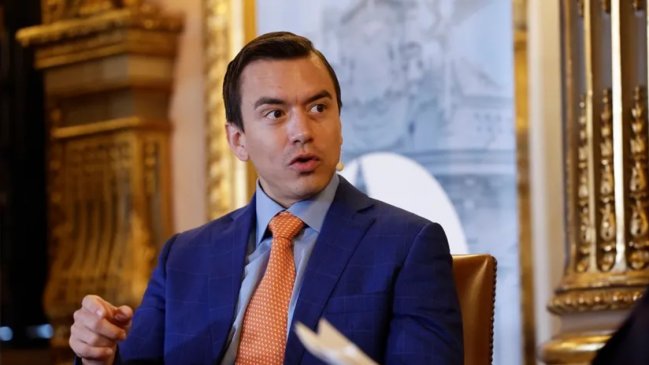
Ecuador's President Daniel Noboa is further streamlining government operations by merging eight ministries and secretariats. This institutional optimization aims to reduce bureaucracy and improve the efficiency of public services, following a similar restructuring undertaken nearly a year ago.
The newly announced changes consolidate several key portfolios. The ministries of Economy and Finance, Agriculture, Livestock, and Fisheries, and Production will now form the Ministry of Economic and Productive Development. This integration is intended to simplify access to programs, incentives, and financing for farmers, entrepreneurs, and producers, eliminating fragmented processes.
avoid that a farmer, entrepreneur or producer depends on fragmented processes between different entities to access programs, incentives or financing.
Additionally, the Ministry of Infrastructure and Transport will merge with the Ministry of Telecommunications and Information Society to create the Ministry of Infrastructure and Technology. This fusion aims to coordinate projects more effectively, accelerate the state's digital transformation, and deploy modern infrastructure across the country.
allow projects to be executed in a more coordinated way, accelerate the digital transformation of the State and bring modern infrastructure to Ecuadorians.
Another significant merger involves the Ministry of Labor, the Ministry of Human Development, and the Secretariat for the Management and Development of Peoples and Nationalities, which will now operate under the Ministry of Labor and Human Development. This integration seeks to ensure that employment policies, social inclusion, support for vulnerable groups, and community development initiatives work in a coordinated manner.
President Noboa also aims to eliminate the 20 most burdensome administrative procedures for citizens and businesses, with a goal of complete digitalization of public services. While the decrees formalizing these changes are pending, the administration emphasizes a plan for efficiency to enhance the quality of public spending and benefit citizens.
allow employment policies, social inclusion, attention to vulnerable groups and community development to work in an articulated manner.
DistantNews Editorial
Originally published by Cooperativa in Spanish. Translated, summarized, and contextualized by our editorial team with added local perspective. Read our editorial standards.
More Stories


From Our Blog

What Gets Lost (and Found) When News Is Translated

The Critical Role of Diaspora Media in Global News

What Travellers Should Know About Countries with Restricted Press

A Digital Nomad's Guide to Following Local News

How the Same Story Looks Different in Different Countries
