


Editorial: Oil, inflation and bond yields are surging toward dangerous levels
Translated from Korean and summarized by DistantNews. Read the original for the full story.
At a glance
Opinion
Documents & data
Ongoing story
- Bond yields in the United States, Japan, Britain, Germany and France have reached their highest levels in years amid oil, inflation and debt concerns.
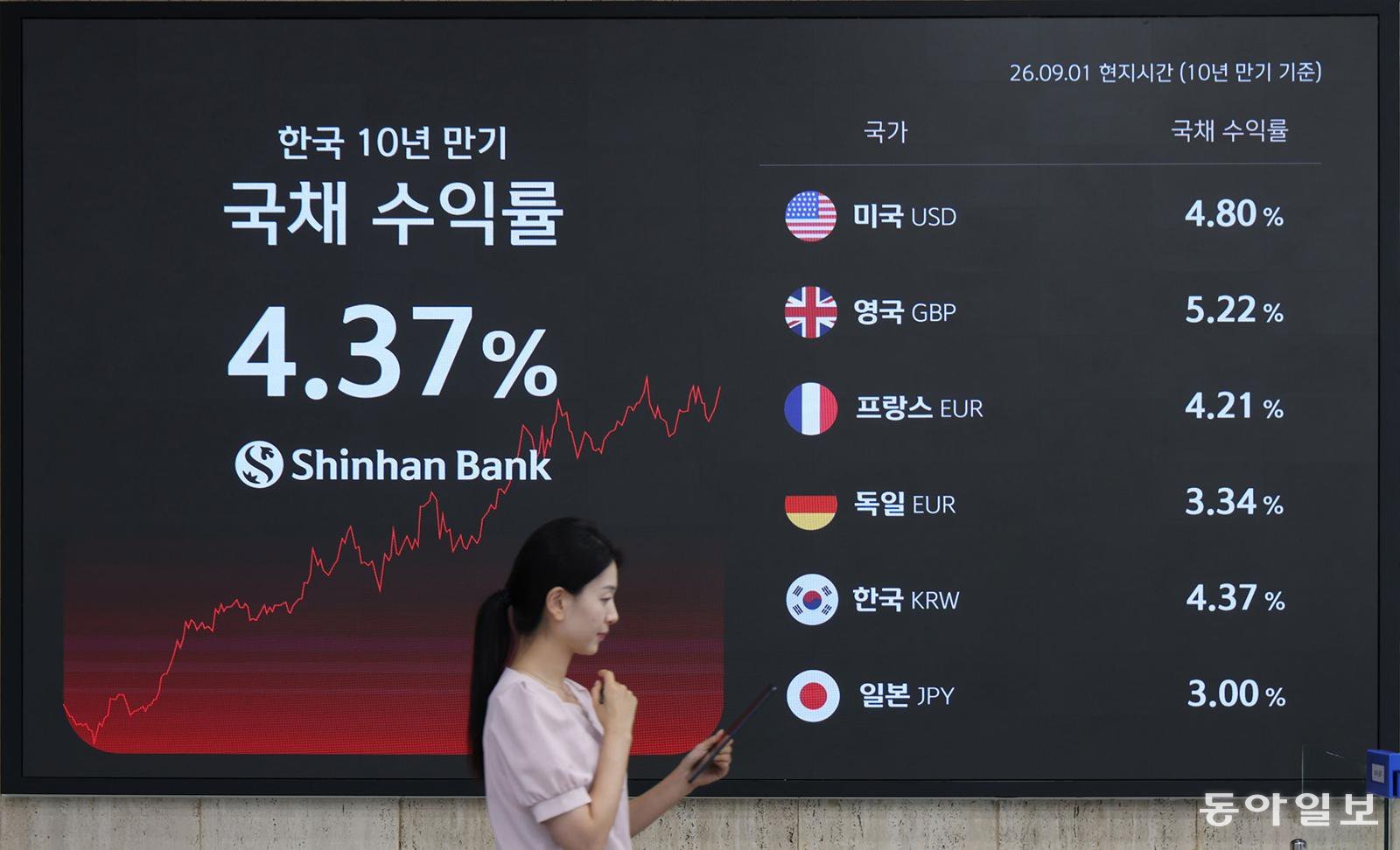
- The U.S. 10-year yield closed at 4.79%, Japan’s 10-year yield briefly exceeded 3%, and Britain’s 30-year yield reached 5.85%.
- The market pressure has spread to equities, with the KOSPI falling 3.99%, while higher rates could weigh on Korean investment, household finances and domestic demand.
Long-term government bond yields across the world’s major economies are rising together, prompting warnings that financial markets may be entering dangerous territory. The surge reflects a combination of higher oil prices, inflation fears, uncertainty over monetary policy and anxiety about heavy government debt.
The U.S. 10-year Treasury yield closed at 4.79% on Sept. 1, up 4.8 basis points and near its highest level since January 2025. Japan’s 10-year yield moved above 3% during the session, reaching its highest point since 1996. Britain’s 30-year yield climbed to 5.85%, its highest since 1998, while 30-year yields in Germany and France reached their highest levels since 2011.
The U.S. 30-year yield stood at 5.27%, its highest level since 2007. Britain and Germany also recorded highs not seen for 18 and 15 years, respectively. Investors have been selling long-term government bonds as several pressures arrive at once, raising fears of a sharp rate shock that could hit stock and capital markets.
The editorial links the move partly to renewed fighting in the Middle East. Direct clashes between the United States and Iran resumed last month after a one-month pause, sending oil prices back into the $90 range after they had fallen into the $60s. Higher energy prices add to inflation pressure and push yields upward. Large fiscal deficits also require governments to issue more debt, even as demand for those bonds may not keep pace.
South Korea could feel the effects through higher market rates, weaker corporate investment and increased interest burdens for households. The government would also need to devote more tax revenue to servicing its debt. The editorial warns that rising borrowing costs could discourage artificial-intelligence investment, even as the country benefits from a semiconductor boom, and calls for early financial-risk management, restraint in expanding spending and a renewed review of fiscal soundness.
About this summary
Originally published by Dong-A Ilbo in Korean. Translated, summarized, and contextualized automatically by DistantNews, with a note on how the source frames the story. Not individually reviewed before publishing. How this works.
More Stories


From Our Blog

What Gets Lost (and Found) When News Is Translated

The Critical Role of Diaspora Media in Global News

What Travellers Should Know About Countries with Restricted Press

A Digital Nomad's Guide to Following Local News

How the Same Story Looks Different in Different Countries
