

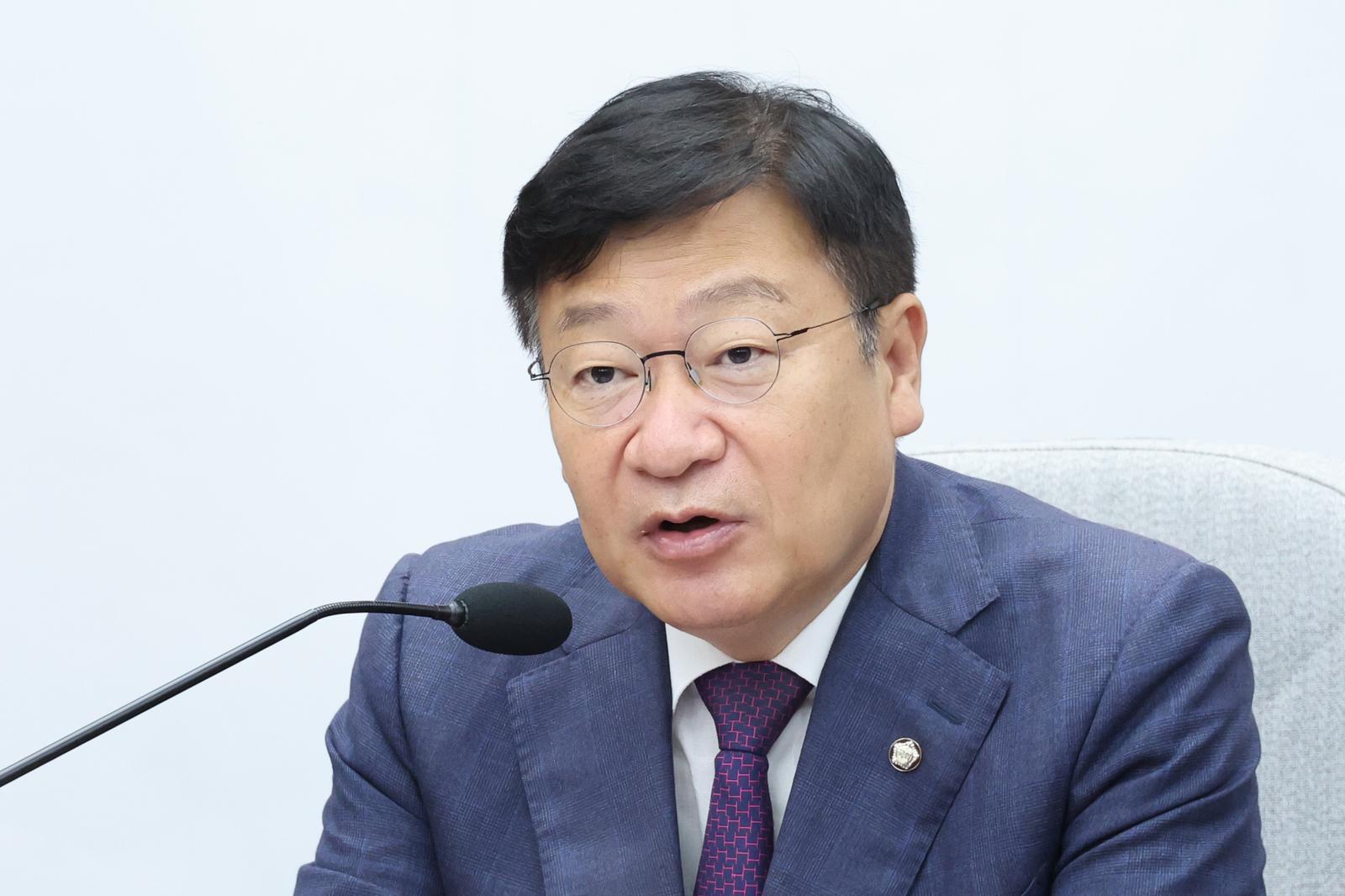

[Editorial] Rise of 'constitutional amendment' debate for NEC reform; ruling and opposition parties must state specific positions
Translated from Korean, summarized and contextualized by DistantNews.
At a glance
Opinion
Sources not specified
Context piece
- South Korean Prime Minister Kim Min-seok and President Lee Jae-myung are considering a "one-point constitutional amendment" to reform the election commission.
- This reform aims to maintain the election commission's independence while introducing external checks and balances following a ballot paper shortage incident.
- The ruling Democratic Party supports exploring constitutional amendments or special prosecutor investigations, while the opposition People Power Party favors legislative action and a special prosecutor over constitutional changes.
South Korean Prime Minister Kim Min-seok has raised the possibility of a "one-point constitutional amendment" to reform the National Election Commission (NEC), emphasizing the need for external oversight while preserving its independence. This discussion follows President Lee Jae-myung's similar suggestion for a targeted amendment if cross-party consensus is reached.
Isn't the answer to ensure the NEC's independence is respected, but to have it subject to external checks and balances, even through a constitutional amendment?
The push for reform intensifies following a recent incident involving a shortage of ballot papers during the June 3 local elections. Public demand for fundamental reform, even to the extent of dissolving the NEC, has grown, leading to the emergence of constitutional amendment proposals. Both the President and the Prime Minister believe that without a fundamental, publicly understandable alternative, the issue will remain unresolved.
The core of the NEC reform debate lies in establishing mechanisms for accountability and transparency without compromising its constitutional independence. However, the NEC's status as a constitutionally independent body presents a challenge. Attempts to create oversight provisions, such as through amendments to the Board of Audit and Inspection Act, could face constitutional challenges, as the Constitutional Court previously ruled against the Board of Audit and Inspection's authority to audit the NEC's duties.
If there is consensus between the ruling and opposition parties, shouldn't we consider even a 'one-point constitutional amendment' regarding the NEC (to allow for oversight)?
The ruling Democratic Party is open to considering both special prosecutor investigations and constitutional amendments. In contrast, the opposition People Power Party has stated its firm opposition to "hasty, piecemeal constitutional amendments" and argues that legislative action, rather than constitutional reform, offers more scope for NEC reform. They advocate for a special prosecutor investigation as the immediate priority, despite having previously called for the NEC's dissolution.
Fundamental reform of the NEC, to the point of dissolution, is being demanded by the public following the ballot paper shortage incident in the June 3 local elections, leading to the rise of constitutional amendment discussions.
While investigations into the ballot paper shortage are underway through a joint police-prosecution task force and a parliamentary inquiry set to begin on June 23, the article stresses the need to simultaneously develop reform plans. The process of amending laws, enacting new legislation, or revising the constitution, along with organizational restructuring, will require significant time. Failure to implement effective reforms could lead to public resistance in future elections, such as the 2028 general election. The article urges the ruling and opposition parties to promptly present their specific reform proposals and proceed with the necessary procedures through consultation.
The core of NEC reform is to establish checks and surveillance mechanisms that strengthen accountability and transparency while maintaining the NEC's independence. The problem is that since the NEC is defined as an independent institution under the Constitution, even if a provision is created to audit the NEC through an amendment to the Board of Audit and Inspection Act, it could be caught in a controversy over unconstitutionality.
DistantNews Editorial
Originally published by Hankyoreh in Korean. Translated, summarized, and contextualized by our editorial team with added local perspective. Read our editorial standards.
More Stories


From Our Blog

What Gets Lost (and Found) When News Is Translated

The Critical Role of Diaspora Media in Global News

What Travellers Should Know About Countries with Restricted Press

A Digital Nomad's Guide to Following Local News

How the Same Story Looks Different in Different Countries
