

Edmonton records wettest summer ever, with more storms expected
Translated from English, summarized and contextualized by DistantNews.
At a glance
News
From a news agency
Context piece
- Edmonton, Canada, has recorded its wettest summer on record, surpassing a 70-year-old record with over 580 mm of rain by late July.
- June alone broke a 112-year-old record with over 260 mm of rainfall.
- More severe thunderstorms are forecast for the coming weeks, continuing a summer marked by frequent flooding and disruptions.
Edmonton, Canada, is experiencing an unprecedented summer of rainfall, officially becoming the wettest summer on record even before August arrives. As of Monday, July 27, 2026, the city has been drenched by over 580 millimeters of rain since the beginning of June, shattering the previous record set in 1953 when 417 millimeters fell between June and August.
Edmonton has broken a record for the wettest summer on record, and it isn’t even August.
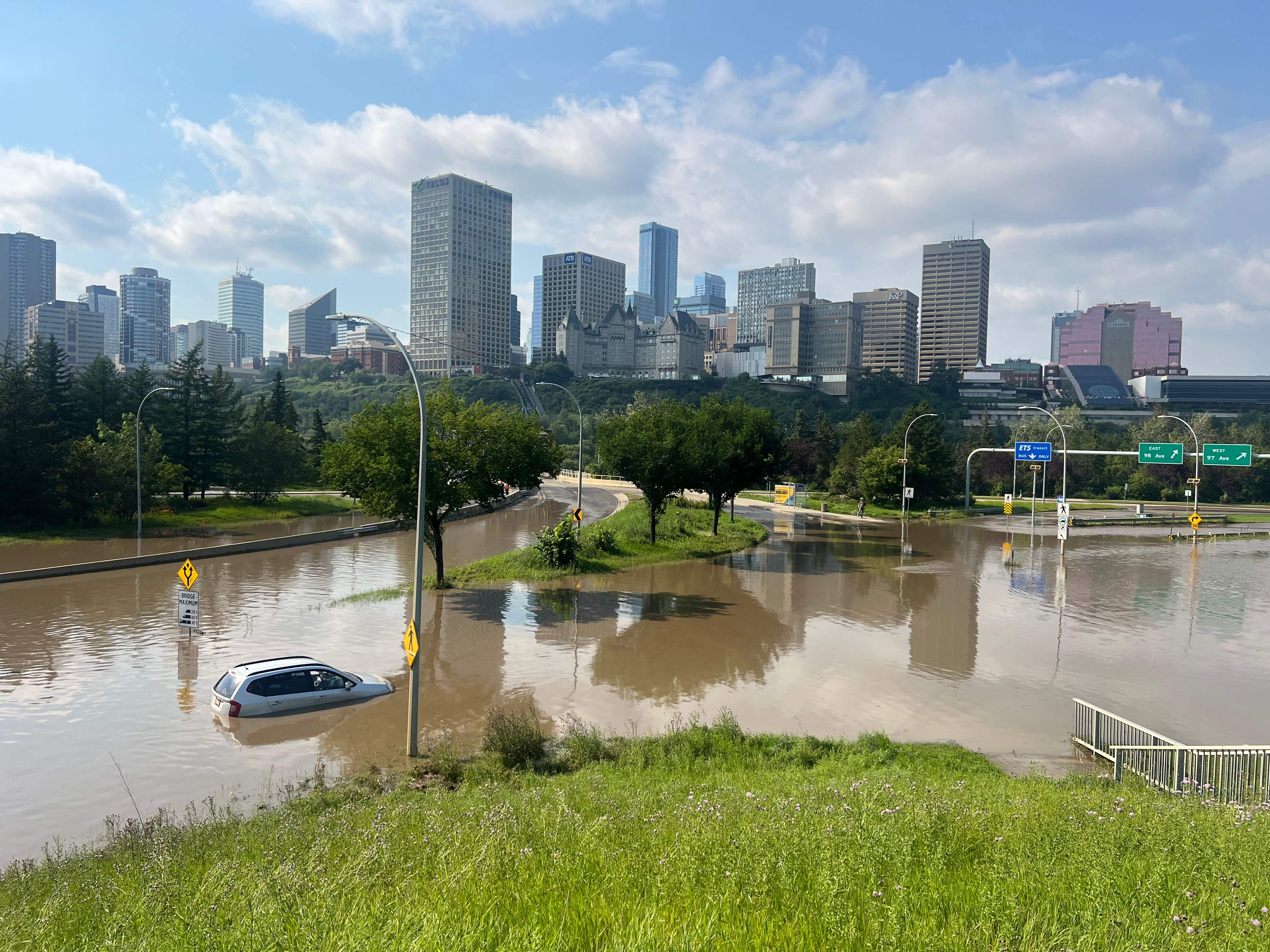
The intensity of the storms has been remarkable, with June alone recording over 260 mm of rain, breaking a 112-year-old record for the month. July has also seen a significant number of stormy days, with 19 recorded by Monday, compared to 15 in June. These frequent and severe thunderstorms have led to widespread disruptions, including flooded roads, downed trees, and halted traffic and public transit.
In 1953, the city received 417 millimetres of rain from June through August.
Brian Proctor, a meteorologist with Environment and Climate Change Canada, confirmed the record-breaking precipitation. The typical monthly average rainfall for Edmonton during the summer months is between 70 and 80 millimeters, with an average annual rainfall of 423 millimeters. This year's rainfall has already significantly exceeded the annual average, and the year is far from over.
Between the beginning of June and Tuesday, the region has been saturated by 580 millimetres of rain and July isn’t over yet.
Looking ahead, more storms are expected in the coming weeks, prolonging what has been described as Edmonton's "summer of soggy misery." The frequent intense storms have routinely caused flooding in streets and basements, leading to the cancellation of events and contributing to a thick cloud of mosquitos. The city is also experiencing its rainiest year in over a century, with 655.7 mm of precipitation recorded since the beginning of 2026, encompassing both heavy winter snowfalls and current rainfall. This places 2026 as the third-wettest year on record overall for Edmonton, following 1900 (745.1 mm) and 1901 (699 mm).
A record-breaking amount of rain fell in June, over 260 mm, breaking a 112-year-old record.
DistantNews Editorial
Originally published by Global News in English. Translated, summarized, and contextualized by our editorial team with added local perspective. Read our editorial standards.
More Stories

From Our Blog

What Gets Lost (and Found) When News Is Translated

The Critical Role of Diaspora Media in Global News

What Travellers Should Know About Countries with Restricted Press

A Digital Nomad's Guide to Following Local News

How the Same Story Looks Different in Different Countries
