


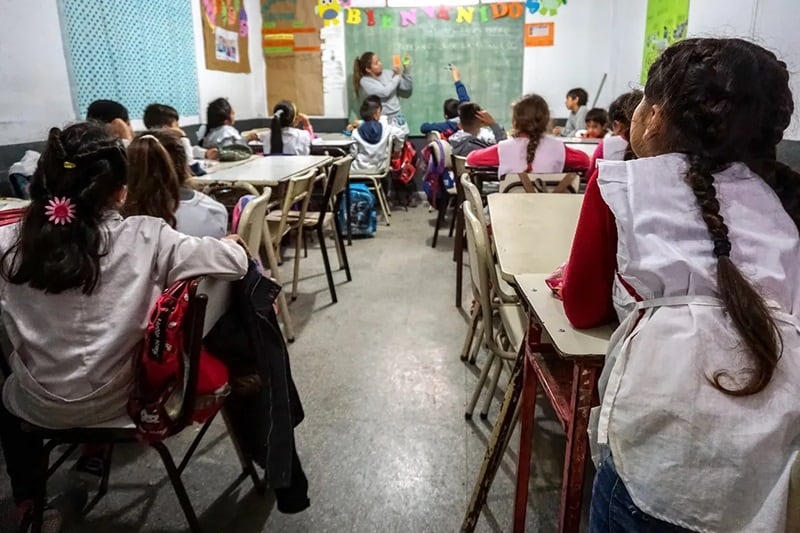
Educational Crisis: Eight in 10 Reject Automatic Promotion, But Repetition Loses Consensus as Solution
Translated from Spanish, summarized and contextualized by DistantNews.
At a glance
News
Documents & data
Context piece
- A survey reveals that nearly 80% of Argentinians reject automatic grade promotion in schools, preferring students to demonstrate minimum learning before advancing.
- While automatic promotion is widely opposed, consensus on grade repetition as the sole solution is weakening, with growing support for pedagogical support instead.
- The study indicates a shift towards prioritizing student well-being, with many favoring psychopedagogical intervention over repeating a grade to avoid stigmatization and emotional impact.
A significant majority of Argentinians are against automatic grade promotion in schools, with nearly eight out of ten respondents rejecting the idea that students should advance without mastering minimum learning requirements. This strong sentiment underscores a widespread value placed on ensuring foundational knowledge before students move to the next educational level.
The work, carried out during April of this year, analyzed perceptions about grade repetition, school stigmatization, responsibilities for low performance, and the alternatives considered most appropriate to guarantee learning.
However, the debate surrounding how to address learning difficulties reveals a more nuanced picture. While automatic promotion faces broad disapproval, the traditional solution of grade repetition is losing consensus. The study indicates a growing preference for reinforcing pedagogical support and individualized student assistance as more effective alternatives to simply making students repeat a grade.
For decades, grade repetition was one of the main tools to respond to learning difficulties. However, various investigations began to warn that this decision can also have consequences that go beyond academic performance.
This shift reflects a broader concern for students' social and emotional development. The research highlights that grade repetition can lead to stigmatization, lower self-esteem, and decreased motivation. Consequently, when faced with a student struggling academically, 44% of respondents favored psychopedagogical intervention over repeating the grade, signaling a move towards more supportive and less punitive educational practices.
Repeating a grade involves separating from the group of peers of the same age and joining another class, a situation that can lead to stigmatization processes, affect self-esteem, alter relationships, and decrease school motivation.
DistantNews Editorial
Originally published by La Nación in Spanish. Translated, summarized, and contextualized by our editorial team with added local perspective. Read our editorial standards.
More Stories



From Our Blog

What Gets Lost (and Found) When News Is Translated

The Critical Role of Diaspora Media in Global News

What Travellers Should Know About Countries with Restricted Press

A Digital Nomad's Guide to Following Local News

How the Same Story Looks Different in Different Countries
