

Egypt's 'Garbage City' recyclers reap gains from Iran war plastic squeeze
Summarized and contextualized by DistantNews.
At a glance
News
Named sources
Context piece
- Recyclers in Cairo's 'Garbage City' are experiencing a surge in demand for plastic due to supply chain disruptions from the US-Iran war.
- Factories are now calling recyclers, seeking to secure plastic materials that were previously scarce.
- The informal recycling system in Manshiyet Nasser, Cairo, handles a significant portion of the city's waste, with families living and working amidst the refuse.
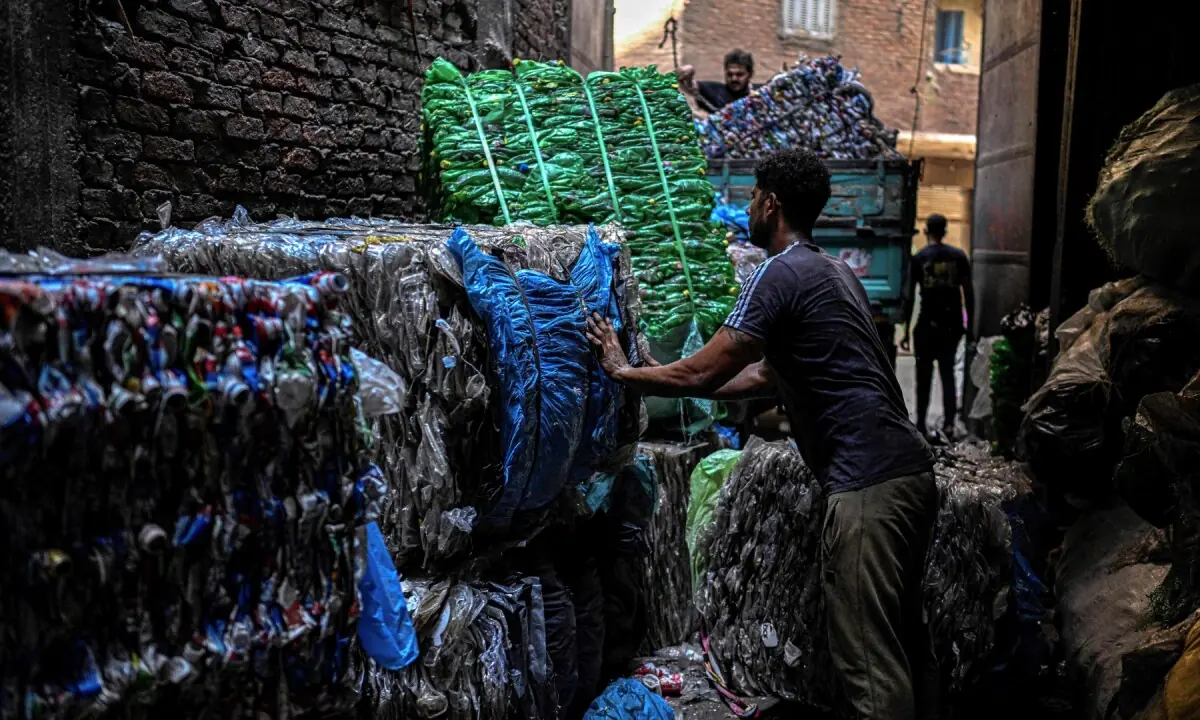
The informal recycling community in Cairo's Manshiyet Nasser, known as 'Garbage City,' is experiencing an unexpected economic boom. This surge is driven by global supply chain disruptions caused by the US-Iran conflict, which has impacted the flow of polyethylene, a key plastic ingredient.
Peter Romany, a 25-year-old recycling specialist, notes a dramatic shift in business. "Before the war, we were the ones calling factories, trying to sell our material," he told AFP. "But after the war broke out, the factories started calling us. They’d ask: How much do you have? Can you deliver today? That never used to happen."
This bustling trade takes place in a densely populated neighborhood where generations of families live and work amidst mountains of waste. Manshiyet Nasser, home to over 115,000 residents, processes more than a third of Cairo's waste. While the community has developed a sophisticated informal recycling system, residents face significant health risks from foul odors and plastic fumes, living and working in close proximity to the refuse.
Before the war, we were the ones calling factories, trying to sell our material. But after the war broke out, the factories started calling us. They’d ask: How much do you have? Can you deliver today? That never used to happen.
DistantNews Editorial
Originally published by Dawn. Summarized and contextualized by our editorial team with added local perspective. Read our editorial standards.
More Stories
From Our Blog

What Gets Lost (and Found) When News Is Translated

The Critical Role of Diaspora Media in Global News

What Travellers Should Know About Countries with Restricted Press

A Digital Nomad's Guide to Following Local News

How the Same Story Looks Different in Different Countries
