


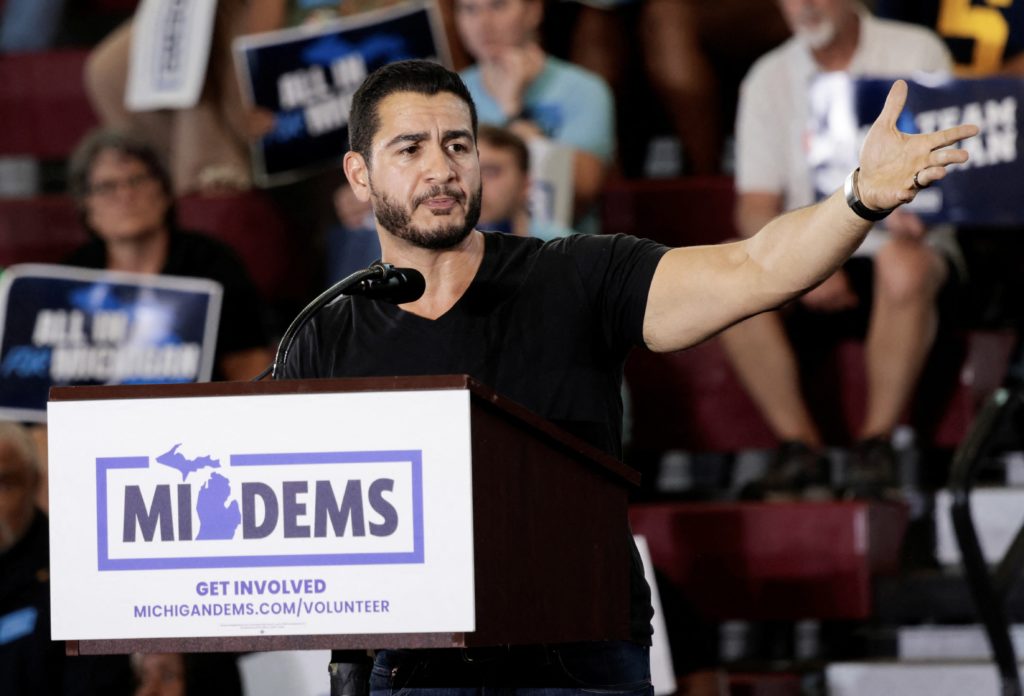
El-Sayed spoke with Obama as Michigan Democrats look to unite after a bitter Senate primary
Summarized and contextualized by DistantNews.
At a glance
News
Named sources
Context piece
- Abdul El-Sayed, Michigan's Democratic Senate nominee, spoke with former President Barack Obama about uniting the party.
- El-Sayed hopes Obama will campaign with him in Michigan, a crucial swing state.
- The party is working to bridge divides between progressive and moderate wings after a contentious primary election.
Abdul El-Sayed, the Democratic nominee for U.S. Senate in Michigan, revealed he has spoken with former President Barack Obama and hopes the former president will campaign with him. This comes as the Democratic Party strives to unite following a bitter primary that exposed significant rifts between its progressive and moderate factions.
I was grateful for his advice. It was very warm, very inviting, and I know that he knows the critical role that Michigan is going to play.
El-Sayed described his Friday conversation with Obama as "really warm and inspiring," expressing gratitude for the former president's advice. "I know that he knows the critical role that Michigan is going to play," El-Sayed told NBC's "Meet the Press." He emphasized Obama's familiarity with winning Michigan, referencing his victories in the 2008 and 2012 presidential races.
An Obama spokesperson confirmed the call, which occurred on the same day other Michigan Democratic nominees and national party figures presented a united front at a rally in Detroit. El-Sayed, a former public health official, narrowly defeated U.S. Rep. Haley Stevens, who was backed by the party establishment, in a closely watched primary.
I really hoped so and that Obama knows a lot about winning Michigan.
Regaining a Senate majority is crucial for Democrats in the upcoming November midterm elections. Michigan, a perennial swing state, was won by Republican Donald Trump in 2016 and Democrat Joe Biden in 2020. El-Sayed faces Republican Mike Rogers, a former congressman. Rogers has attempted to capitalize on Democratic internal tensions, releasing a video message inviting Democrats who feel the party has moved too far left under El-Sayed to consider joining Republicans.
We aired our differences.
During a Sunday interview with CNN, El-Sayed acknowledged the primary's heated nature but stressed that the internal divisions are minor compared to shared goals. "You're seeing folks come together," he said, adding that while moderates might see the world differently, they recognize the "responsibility to come together."
But he said the internal divisions are so much smaller than the similarities that we share.
DistantNews Editorial
Originally published by PBS NewsHour. Summarized and contextualized by our editorial team with added local perspective. Read our editorial standards.
More Stories


From Our Blog

How the Same Story Looks Different in Different Countries

What Gets Lost (and Found) When News Is Translated

The Critical Role of Diaspora Media in Global News

What Travellers Should Know About Countries with Restricted Press

A Digital Nomad's Guide to Following Local News
