


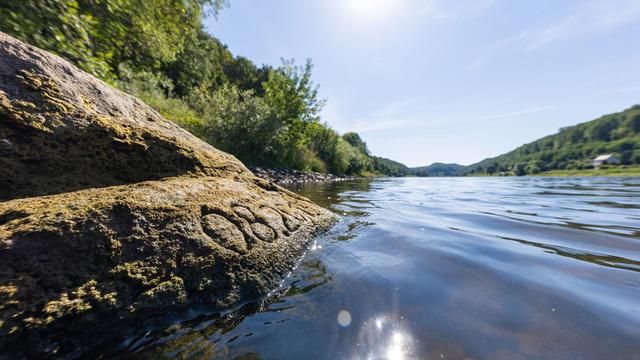
Elbe River's low water levels reveal 'hunger stone' amid drought
Translated from German, summarized and contextualized by DistantNews.
At a glance
News
Sources not specified
Context piece
- Low water levels in the Elbe River have revealed a 'hunger stone'.
- These stones historically appeared during severe droughts, serving as a warning of impending famine.
- The reappearance of the stone highlights the severity of the current drought conditions in the region.
The Elbe River's receding waters have exposed a 'hunger stone,' a stark reminder of severe drought periods in Central Europe. These ancient markers, submerged for years, emerge only when water levels drop to critical lows, historically signaling hardship and potential famine.
The reappearance of this particular hunger stone in the Elbe underscores the intensity of the current dry spell affecting the region. Such stones, often inscribed with dates and warnings, served as a historical record of devastating droughts, alerting communities to the dire consequences for agriculture and water supply.
As the river's flow diminishes, the visibility of these stones provides a tangible link to past environmental challenges. Their emergence is a somber indicator of the ecological stress caused by prolonged periods of low rainfall, prompting concerns about water availability and its impact on the local environment and economy.
DistantNews Editorial
Originally published by Die Zeit in German. Translated, summarized, and contextualized by our editorial team with added local perspective. Read our editorial standards.
More Stories



From Our Blog

What Gets Lost (and Found) When News Is Translated

How the Same Story Looks Different in Different Countries

The Critical Role of Diaspora Media in Global News

What Travellers Should Know About Countries with Restricted Press

A Digital Nomad's Guide to Following Local News
