

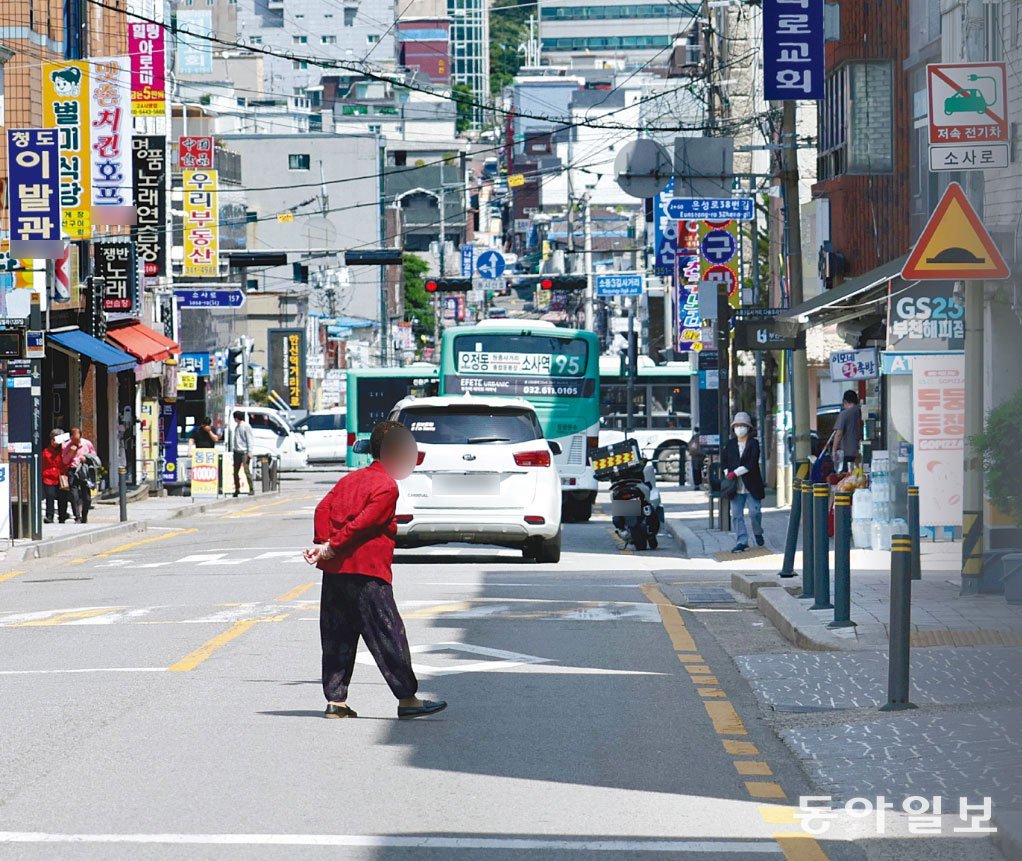

Elderly Pedestrians Stranded Mid-Crossing as Signals Change Too Quickly
Translated from Korean, summarized and contextualized by DistantNews.
At a glance
News
Sources not specified
Context piece
- Elderly pedestrians in Seoul's Dongdaemun district face challenges crossing streets due to short signal times.
- Many seniors, like 79-year-old Ham Dae-ik, find themselves stranded mid-crossing when signals change, forcing them to seek refuge on bus platforms.
- The area has a high proportion of elderly residents and a significant number of traffic accidents involving older pedestrians.
Seoul's Dongdaemun district, particularly near Cheongnyangni Market, presents a daily struggle for its elderly population. Ham Dae-ik, 79, found himself stranded mid-crossing at a bus-only lane intersection, his pace unable to match the rapid signal change. "I thought I could cross enough, but my body just couldn't keep up," he lamented, forced to retreat to a bus stop to avoid oncoming traffic.
He expressed a common sentiment among seniors: "I always think the signal should be just a little longer." The area's demographics highlight the urgency of this issue, with elderly populations significantly exceeding Seoul's average in Jegi-dong and Cheongnyangni-dong. Data from the Road Traffic Authority reveals nine severe pedestrian accidents involving seniors in the vicinity between 2022 and 2024.
I thought I could cross enough, but my body just couldn't keep up.
Observations over two hours revealed numerous elderly individuals, many using walking sticks, navigating the busy streets. The short crossing times leave them vulnerable, creating a dangerous situation where they risk being caught in traffic. The need for adjusted pedestrian signal timings is evident, as the current infrastructure fails to accommodate the mobility needs of the district's aging residents.
I always think the signal should be just a little longer.
DistantNews Editorial
Originally published by Dong-A Ilbo in Korean. Translated, summarized, and contextualized by our editorial team with added local perspective. Read our editorial standards.
More Stories



From Our Blog

What Gets Lost (and Found) When News Is Translated

The Critical Role of Diaspora Media in Global News

What Travellers Should Know About Countries with Restricted Press

A Digital Nomad's Guide to Following Local News

How the Same Story Looks Different in Different Countries
