


Elderly struggle with kiosks, prompting digital inclusion programs in South Korea
Translated from Korean, summarized and contextualized by DistantNews.
At a glance
News
Sources not specified
Context piece
- Elderly individuals are facing difficulties using self-service kiosks, leading to feelings of exclusion and frustration.
- Initiatives like the 'AI Digital Learning Center' and 'Digital Masil' program are helping seniors learn digital skills, including kiosk operation.
- The scope of digital education is expanding beyond ordering food to encompass everyday tasks like banking and using public lockers.
Many elderly people in South Korea struggle with the increasing prevalence of self-service kiosks, often feeling excluded and frustrated by technology they find difficult to navigate. This digital divide is becoming a significant social issue, impacting their ability to perform simple daily tasks.
I can't even order food myself.
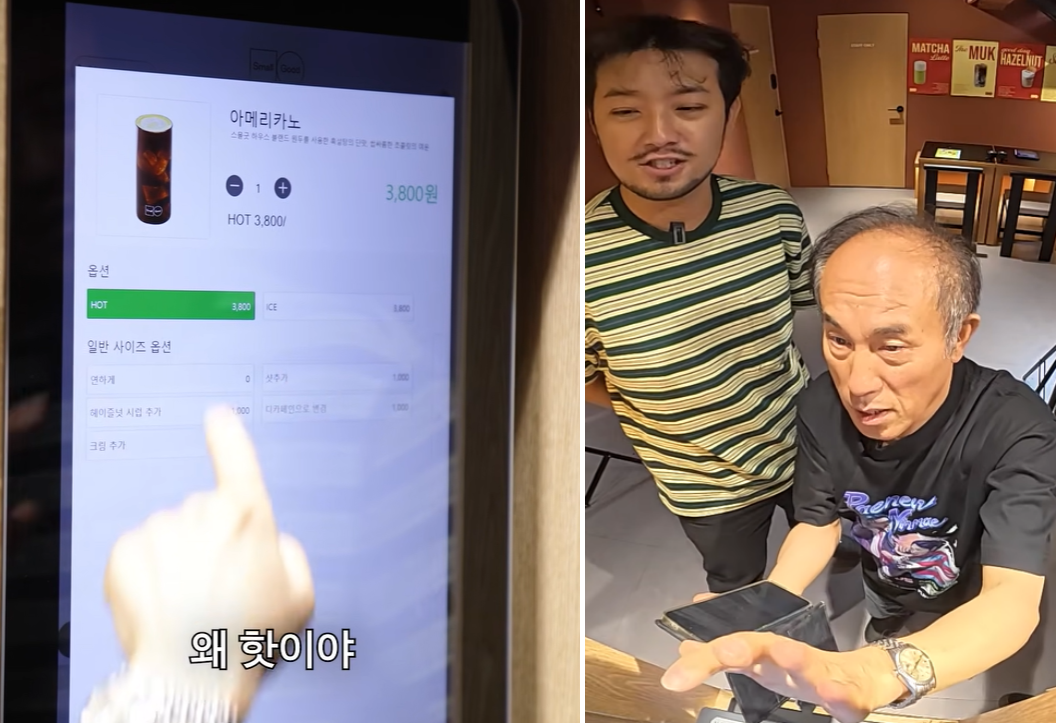
One elderly man, Professor Jeong Il-yeong, shared his experience of being unable to order coffee at a highway rest stop due to a kiosk. He recounted how three middle-aged women also failed to operate the machine, and a staff member refused to help. "I can't even order food myself," Jeong lamented, highlighting the sense of helplessness.
To address this, government and private sectors are collaborating. The Ministry of Science and ICT and the National Information Society Agency have established 'AI Digital Learning Centers.' In partnership with these centers, Lotte GRS has been running the 'Digital Masil' program since 2023, offering practical kiosk training at Lotteриа outlets. This program allows seniors to learn basic operations, menu selection, and payment methods before practicing in a real store environment.
Kiosks have been a big topic lately. Seniors feel excluded and their self-esteem drops.
The initiative has expanded to 13 metropolitan cities and provinces this year, aiming to train 7,000 individuals. Lotte GRS has also developed a kiosk simulation program for pre-order practice and is seeing high satisfaction rates from participants. Beyond food ordering, digital education is broadening to include tasks like train ticket reservations, banking, and using public lockers, with dedicated experience centers established in various locations across Seoul.
Why can't I eat what I pay for?
DistantNews Editorial
Originally published by Dong-A Ilbo in Korean. Translated, summarized, and contextualized by our editorial team with added local perspective. Read our editorial standards.
More Stories


From Our Blog

What Gets Lost (and Found) When News Is Translated

The Critical Role of Diaspora Media in Global News

What Travellers Should Know About Countries with Restricted Press

A Digital Nomad's Guide to Following Local News

How the Same Story Looks Different in Different Countries
