


Electrifying the Economy: A National and European Imperative
Translated from Greek, summarized and contextualized by DistantNews.
At a glance
Analysis
Sources not specified
Context piece
- The European Union's push for renewable energy has progressed, but electricity still accounts for only about 23% of final energy consumption.
- Key economic sectors like transport, heating, and industry rely heavily on oil and gas, creating strategic vulnerabilities for Europe.
- Electrification offers Greece a chance to leverage its renewable potential and geographic position for economic and geopolitical advantage.
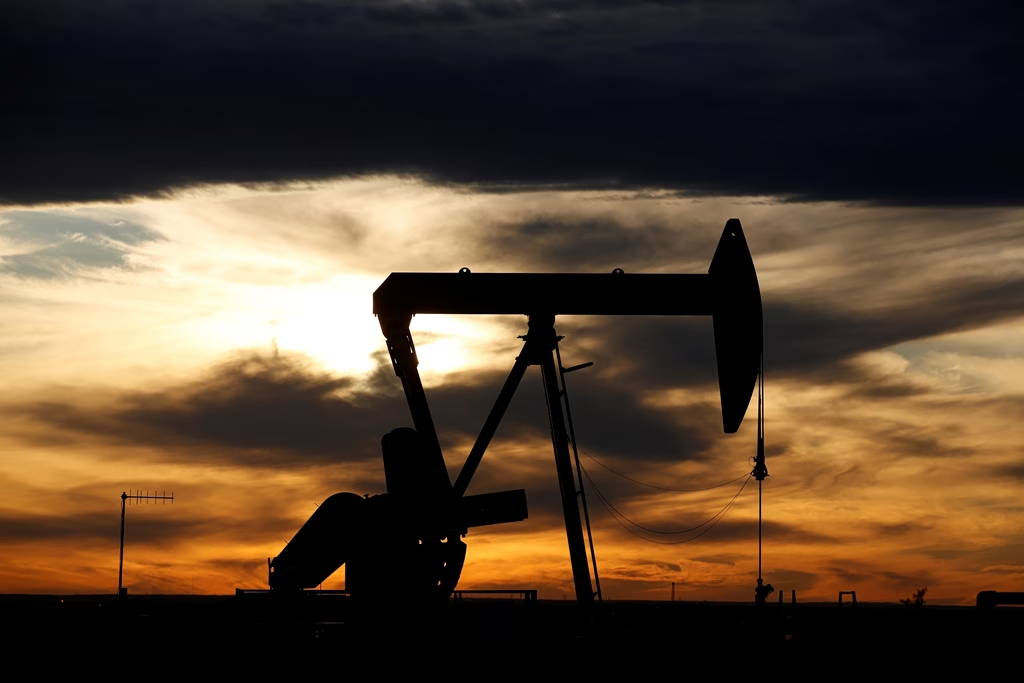
Europe's ambitious green transition is facing a critical bottleneck: the slow pace of electrification across its economy. While the European Union has invested heavily in renewable energy sources, electricity still makes up only about 23% of final energy consumption. Crucial sectors such as transportation, heating, and a significant portion of industrial production remain dependent on oil and natural gas.
International Energy Agency head Fatih Birol has warned that this sluggish progress is a "serious strategic mistake" for Europe. European Commissioner for Energy Dan Jørgensen echoed this concern, noting that the electrification rate has stagnated for a decade and urgently needs acceleration. The paradox is clear: Europe is generating more clean electricity but cannot fully utilize it, while much of its economic activity continues to consume imported fossil fuels.
The slow progress of electrification is a serious strategic mistake for Europe.
This reliance on imported fuels not only burdens economic competitiveness and exposes nations to volatile market fluctuations but also limits policy freedom and hinders the path toward European autonomy. For Greece, the imperative for electrification is even greater. The country possesses substantial solar and wind potential and a strategic geographic location, enabling it to develop crucial interconnections in the Eastern Mediterranean.
Electrification presents a significant opportunity for economic growth and geopolitical leverage. It reduces household and business exposure to international energy crises, keeping capital within the Greek economy. Investments in grids, storage facilities, and renewable energy equipment manufacturing will stimulate the Greek industrial sector. Historically, fossil fuel economies have been intrinsically linked to geopolitical instability, with control over resources and trade routes shaping international rivalries and creating dependencies. The current geopolitical climate underscores the need for energy independence, making the transition to renewables not just an environmental goal but a strategic necessity.
The pace of electrification has remained stagnant for a decade and must be accelerated.
DistantNews Editorial
Originally published by Kathimerini in Greek. Translated, summarized, and contextualized by our editorial team with added local perspective. Read our editorial standards.
More Stories

From Our Blog

What Gets Lost (and Found) When News Is Translated

The Critical Role of Diaspora Media in Global News

What Travellers Should Know About Countries with Restricted Press

A Digital Nomad's Guide to Following Local News

How the Same Story Looks Different in Different Countries
