

Energy Security: Renewables Group Calls for Emergency Backup System Against Grid Sabotage
Translated from German and summarized by DistantNews. Read the original for the full story.
At a glance
News
Named sources
Under investigation
- The German Renewable Energy Federation called for an emergency backup system after suspected attacks disrupted power facilities in Brandenburg and North Rhine-Westphalia.
- President Ursula Heinen-Esser said decentralized generators, including bioenergy and hydropower, could restart quickly without external power, while batteries could provide short-term electricity.
- Energy industry leader Kerstin Andreae urged tighter protection of critical-infrastructure information and legal changes to permit camera monitoring of nearby public areas.
Germany’s renewable energy sector wants the country to prepare for power-grid attacks with a backup system that can keep smaller failures from becoming wider outages.
“There is no complete protection against such attacks,” Ursula Heinen-Esser, president of the German Renewable Energy Federation, told the Rheinische Post. But she said the energy transition offered an opportunity to reduce risks, detect attacks earlier and limit their effects.
Many smaller, decentralized generators could form part of that response. Heinen-Esser said bioenergy and hydropower plants can restart without an external electricity supply after a blackout. Batteries could also step in at short notice and provide affordable power during an emergency.
There is no complete protection against such attacks.
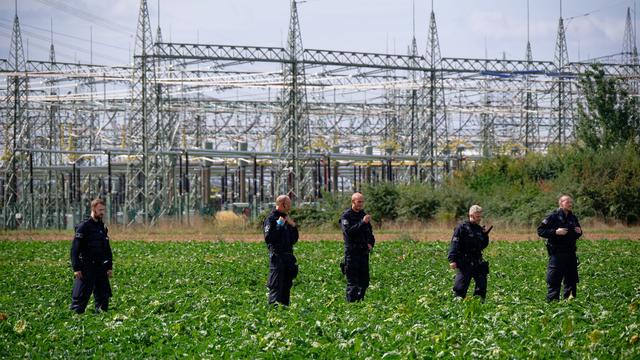
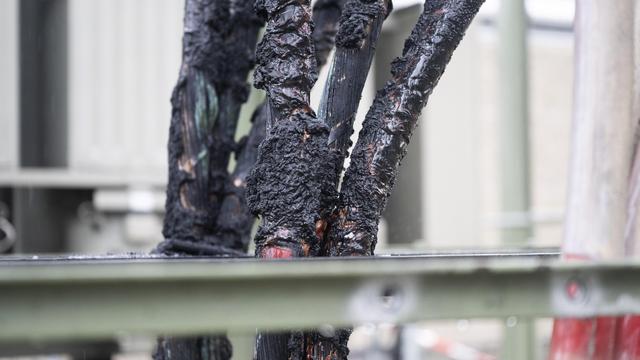
The call followed two incidents within a short period. Authorities reported an attack on the power supply at the Turnow-Preilack substation in southern Brandenburg and a disruption at a substation in Bergheim near Cologne. Investigators found launch devices and pyrotechnics near both locations, which may have been installed some time earlier. They suspect the incidents involved sabotage by groups hostile to the constitutional order.
Kerstin Andreae, chief executive of the German Association of Energy and Water Industries, also called for action. She said detailed information and plans for critical infrastructure should not be freely accessible to potential attackers. Data-protection rules, she added, should be adjusted so that cameras can legally monitor adjoining public areas.
But in the current phase of the energy transition, we can pay closer attention to minimizing risks and structure our energy supply so that possible attacks are detected earlier and have less impact.
About this summary
Originally published by Die Zeit in German. Translated, summarized, and contextualized automatically by DistantNews, with a note on how the source frames the story. Not individually reviewed before publishing. How this works.
More Stories


From Our Blog

What Gets Lost (and Found) When News Is Translated

How the Same Story Looks Different in Different Countries

The Critical Role of Diaspora Media in Global News

What Travellers Should Know About Countries with Restricted Press

A Digital Nomad's Guide to Following Local News
