


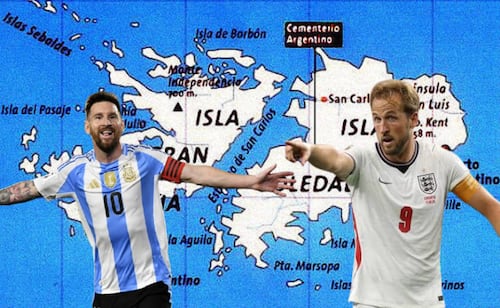
England vs. Argentina: The History Behind the 'Malvinas Classic' Rivalry
Translated from Spanish, summarized and contextualized by DistantNews.
At a glance
In-depth
Named sources
Context piece
- The soccer match between England and Argentina is more than just a game, carrying deep political and social weight.
- The rivalry stems directly from the dispute over the sovereignty of the Falkland Islands (Islas Malvinas).
- Key historical moments, including the 1982 Falklands War and controversial matches in 1966 and 1986, fuel the intense enmity between the two nations.
The soccer pitch between England and Argentina is a battleground steeped in history, far exceeding the bounds of a mere sporting contest. Today's World Cup 2026 semifinal in Atlanta is not just about advancing to the final; it's a continuation of a rivalry fueled by the long-standing dispute over the sovereignty of the Falkland Islands, known as the Islas Malvinas in Argentina. This territorial tension has deep roots, with Argentina's claim to the archipelago dating back over a century after the United Kingdom formally took control in 1833. The conflict escalated dramatically in 1982 when Argentina's military junta ordered troops to land on the islands, triggering a 74-day war against British forces. Historians note that London's response was driven by a firm need to maintain its international standing. The armed confrontation concluded on June 14, 1982, with Argentina's surrender, leaving a tragic toll of 649 Argentine and 255 British soldiers dead. This bloody chapter irrevocably transformed subsequent sporting encounters between the two nations into contests of honor and collective memory. The animosity first flared on the field in 1966 during a quarterfinal match in London. Argentine captain Antonio Rattín's controversial expulsion and subsequent protest, sitting on the queen's red carpet, was deemed offensive by the hosts. The English manager Alf Ramsey's public denunciation of the South American footballers as "animals" ignited the enmity. The symbolic weight intensified in 1986 in Mexico, just four years after the war. Diego Armando Maradona delivered two of football's most iconic goals: the illicit "Hand of God" and the "Goal of the Century," cementing Argentina's victory and deepening the historical narrative of their rivalry.
Today, the England and Argentina national teams compete in the Atlanta Stadium for a place in the grand final of the world tournament. Although the protagonists insist that it is only a soccer match, history shows that this confrontation carries a deep political and social burden.
DistantNews Editorial
Originally published by El Universal in Spanish. Translated, summarized, and contextualized by our editorial team with added local perspective. Read our editorial standards.
More Stories



From Our Blog

What Press Freedom Means for the News You Read

What Gets Lost (and Found) When News Is Translated

The Critical Role of Diaspora Media in Global News

What Travellers Should Know About Countries with Restricted Press

A Digital Nomad's Guide to Following Local News
