


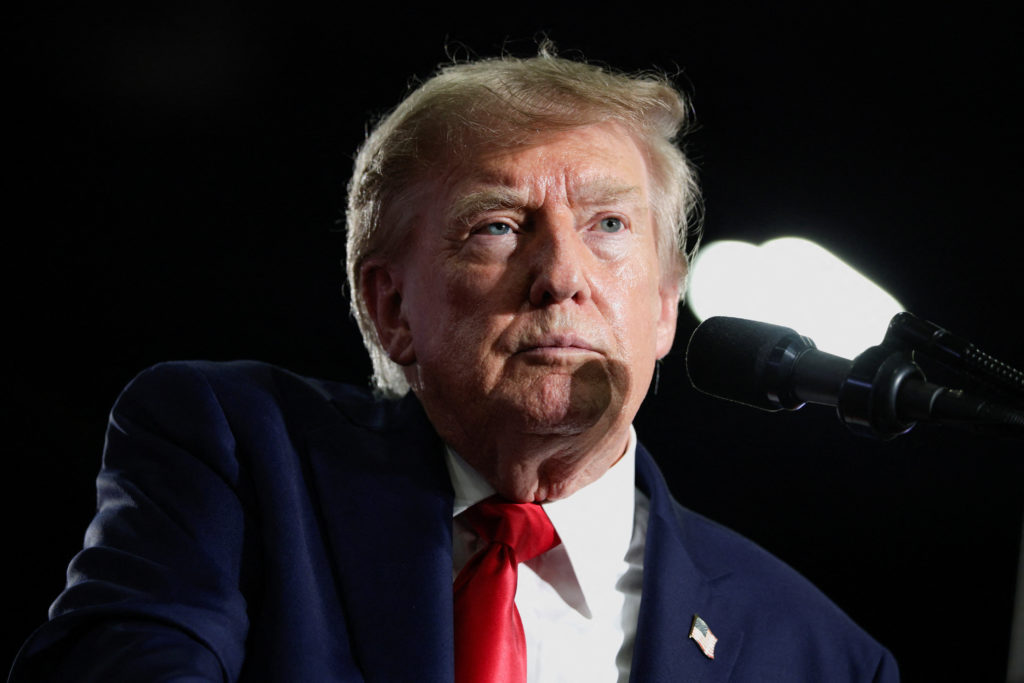
Enriched uranium stockpile undercuts Trump claim of Iran's 'essential denuclearization'
Summarized and contextualized by DistantNews.
At a glance
Analysis
Named sources
Context piece
- President Trump claimed Iran has undergone "essential denuclearization" as an accomplishment.
- Experts are skeptical, stating that while 2025 military strikes set back Iran's nuclear program, they did not eliminate it.
- The U.S. has not secured Iran's enriched uranium, and the conflict may have strengthened hardliners' desire for a nuclear weapon.
President Donald Trump has repeatedly claimed "the essential Denuclearization of Iran" as a key win for his administration. In a recent social media post, he listed it among his accomplishments. When asked for evidence, a White House spokesperson cited military operations that "obliterated Iran's nuclear facilities, sunk their navy, wiped out Iran's defense industrial base, and continues to strangle what's left of their economy."
military operations under Trump "obliterated Iran's nuclear facilities, sunk their navy, wiped out Iran's defense industrial base, and continues to strangle what's left of their economy with one of the most successful naval blockades in history."
However, nuclear specialists and experts express doubt that Iran has achieved anything close to "essential denuclearization." While U.S. and Israeli military strikes in 2025 likely hindered Iran's nuclear program, they did not dismantle it. Experts note that recent attacks during the current war have not further diminished Iran's nuclear capabilities. Crucially, the U.S. has not gained control of Iran's highly enriched uranium, and the extent of damage to machinery used for enrichment remains unclear.
The United States and our allies are already safer" because of the war the U.S. launched Feb. 28, Wales said.
Paradoxically, the ongoing conflict initiated by the U.S. may have bolstered the position of hardliners within the Iranian regime. This could potentially increase their motivation to pursue nuclear weapons and complicate future diplomatic efforts aimed at curbing nuclear weaponization. Richard Nephew, a senior research scholar at Columbia University, stated, "There is no solid evidence to support the idea that Iran has lost the desire to produce a nuclear weapon. If anything, there is more rhetoric in Iran about moving toward weapons rather than denuclearization."
There is no solid evidence to support the idea that Iran has lost the desire to produce a nuclear weapon. If anything, there is more rhetoric in Iran about moving toward weapons rather than denuclearization.
Denuclearization remains a stated war aim for the U.S., but progress appears limited. The U.S. previously engaged in a 2015 agreement that offered sanctions relief in exchange for limits on Iran's nuclear activities and international inspections, an agreement from which Trump withdrew in 2018. While the 2025 bombings were a setback for Iran's nuclear capabilities, making reconstitution difficult and time-consuming, they did not achieve complete denuclearization.
Iran's nuclear program was significantly degraded" in the 2025 attacks, making it "difficult and time-consuming for Iran to reconstitute the program lost, especially under threat of further attack."
DistantNews Editorial
Originally published by PBS NewsHour. Summarized and contextualized by our editorial team with added local perspective. Read our editorial standards.
More Stories


From Our Blog

How the Same Story Looks Different in Different Countries

What Gets Lost (and Found) When News Is Translated

The Critical Role of Diaspora Media in Global News

What Travellers Should Know About Countries with Restricted Press

A Digital Nomad's Guide to Following Local News
