


Environmental Groups Demand Rewetting of Landscapes to Fight Wildfires
Translated from German, summarized and contextualized by DistantNews.
At a glance
News
Named sources
Context piece
- Environmental groups Nabu and BUND are calling for the rewetting of drained moors and forests in Germany to combat severe wildfires and drought.
- They argue that wetter landscapes are crucial for resilience against climate change impacts like fires, drought, and heavy rainfall.
- The German Timber Industry Association (HDH) advocates for accelerated conversion to climate-stable forests and sustainable management, including regular thinning, to reduce fire risks.
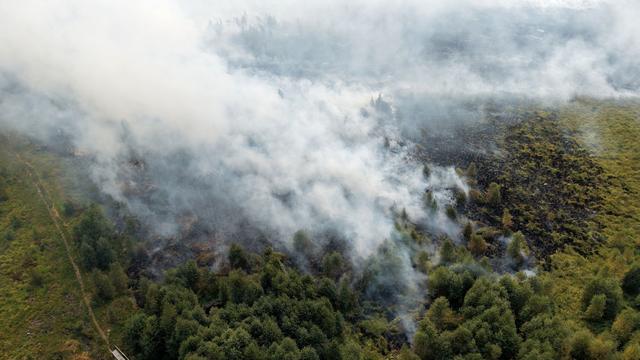
In response to severe wildfires in Germany's Hürtgenwald and Hohes Venn regions, major environmental organizations Nabu and BUND are urging a return to wetter landscapes. They emphasize that the rapid rewetting of drained moors, forests, and floodplains is essential not only for fire prevention but also as a defense against drought, heat, and heavy rainfall.
The organizations stress the importance of resilient landscapes in the face of the climate crisis. BUND state chairman Holger Sticht noted that intact moors are less susceptible to burning, and near-natural forest ecosystems have a lower fire risk than artificial plantations. Historically, many moors in North Rhine-Westphalia and surrounding areas were drained for agriculture and forestry up until the 20th century. Even in the Hohes Venn, only a small portion of the raised bog landscape has been renatured, posing a significant problem as increasing dry periods make these drained areas particularly vulnerable to fires.
Nabu president Jörg-Andreas Krüger highlighted that rewetting is vital for flood protection and that intact, wet moors act as natural water reservoirs during droughts. "The fire in the Hohes Venn is drastically showing us how vulnerable landscapes are in times of heat and drought," Krüger stated, emphasizing the need for a fundamental change in water management. He called for landscapes that can absorb water like a sponge and release it during dry periods, with moors being indispensable for this function. Farmers should be adequately compensated for maintaining a natural water balance, and political commitment and sufficient funding are needed for moor restoration.
Meanwhile, the Hauptverband der Deutschen Holzindustrie (HDH), representing the timber industry, supports an accelerated transition to climate-stable forests and sustainable forest management. HDH president Carsten Merforth pointed out that devastating wildfires in France spread particularly in unmanaged areas. He warned that unkempt forests with dense stands or high amounts of deadwood, increasingly common in Germany, can fuel fires and hinder firefighting efforts. HDH advocates for forest maintenance and regular thinning to reduce fire risks, recommending the removal of deadwood to prevent increased fuel load.
DistantNews Editorial
Originally published by Die Zeit in German. Translated, summarized, and contextualized by our editorial team with added local perspective. Read our editorial standards.
More Stories


From Our Blog

What Gets Lost (and Found) When News Is Translated

How the Same Story Looks Different in Different Countries

The Critical Role of Diaspora Media in Global News

What Travellers Should Know About Countries with Restricted Press

A Digital Nomad's Guide to Following Local News
