


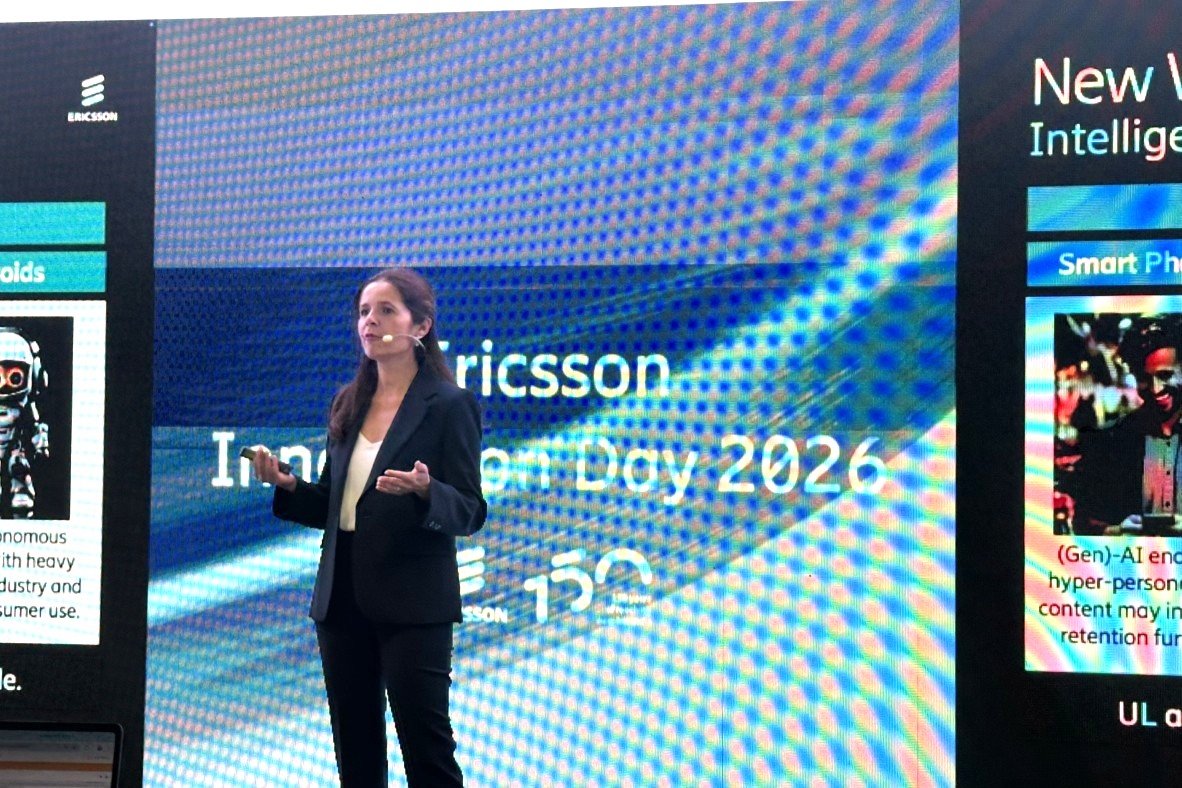
Ericsson Sees 5G Standalone as the Path to 6G and New Telecom Revenue
Translated from Korean and summarized by DistantNews. Read the original for the full story.
At a glance
Press release
Official statement
New plan
- Ericsson Korea presented a gradual evolution from 5G standalone and 5G Advanced to 6G, with AI and programmable hardware integrated into networks.
- The company highlighted AI-RAN, integrated sensing and communications, network slicing, quality-assurance APIs and dynamic AI offloading.
- Ericsson said its custom chips can improve AI processing while reducing energy use, and argued that differentiated connectivity could create new revenue streams for telecom operators.
Ericsson Korea is presenting 6G not as a break from today’s networks, but as an upgrade path built on 5G standalone and 5G Advanced.
At a media briefing ahead of Ericsson Innovation Day 2026 Korea, the company said artificial intelligence and programmable hardware would gradually be added to networks. The event will address how networks can support AI services and how AI can improve network performance, energy efficiency and operations.
As AI spreads across industries, networks are being redefined beyond simple communications infrastructure into core foundations supporting AI services.
Ericsson Korea CEO Ylber? No, the source identifies the executive as Sibel Tombaz. She said networks were being redefined as infrastructure for AI services rather than simple communications systems. Future applications such as AI glasses, autonomous driving and physical AI will require greater uplink capacity, consistent low latency and stable connections, she said.
The company plans to showcase AI-RAN, which it defines as applying AI across all layers of the radio access network. It also highlighted integrated sensing and communications, which combines data transmission with the detection and tracking of nearby objects, as well as network slicing, quality-assurance APIs and dynamic AI offloading.
In the AI era, the business paradigm is shifting toward commercializing intelligent services themselves.
Ericsson said it has developed its own silicon for nearly two decades and recently increased related investment about threefold. It presented chips with 10 times the previous AI processing capability, while the AIR 3267 was designed to cut energy consumption by up to 30 percent. The company said the technology could support applications ranging from drone detection and industrial monitoring to dedicated connectivity for cloud gaming, video conferences, emergency services and AI providers.
Tombaz said operators could sell intelligent services themselves as business models change. Ericsson also said software upgrades could help existing infrastructure move toward 5G standalone and 6G, and that it would discuss this transition with Korean operators and the government.
The network investment of today will not be disconnected, but will lead directly to AI-native 6G.
About this summary
Originally published by Dong-A Ilbo in Korean. Translated, summarized, and contextualized automatically by DistantNews, with a note on how the source frames the story. Not individually reviewed before publishing. How this works.
More Stories


From Our Blog

What Gets Lost (and Found) When News Is Translated

The Critical Role of Diaspora Media in Global News

What Travellers Should Know About Countries with Restricted Press

A Digital Nomad's Guide to Following Local News

How the Same Story Looks Different in Different Countries
