

ESA Releases Most Detailed Image of Milky Way Center, Aiding Exoplanet Study
Translated from Turkish, summarized and contextualized by DistantNews.
At a glance
News
Named sources
Context piece
- The European Space Agency (ESA) released the largest and most detailed visible light image of the Milky Way's center.
- The image, captured by the Euclid space telescope, contains over 60 million stars, nebulae, and star clusters.
- This detailed view will aid astronomers in studying exoplanets, potentially discovering new ones through microlensing techniques.
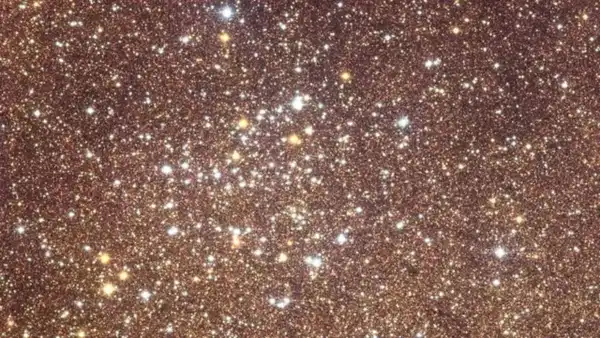
The European Space Agency (ESA) has unveiled the most extensive and detailed visible light image ever captured of the Milky Way's central region. This stunning photograph, taken by the Euclid space telescope, showcases more than 60 million stars, along with nebulae and star clusters, offering an unprecedented glimpse into the heart of our galaxy.
Remarkably, this image was not part of Euclid's original mission plan, which focuses on studying the dark, invisible universe. However, at the request of researchers, the telescope was temporarily redirected for a single day to observe the "galactic bulge" – the densely packed central area of the Milky Way. Xavier Dupac, a lead scientist for the Euclid mission, explained the shift in focus: "Normally, Euclid observes deep cosmological space. This time, we did the opposite. We pointed to a very crowded area in the bulge of our galaxy."
Euclid's exceptional resolution and sensitivity allowed it to capture extraordinary detail in this crowded region, distinguishing individual stars even those that are quite faint. The resulting image is a vast mosaic, composed of nine individual sections, each larger than the full moon. This provides astronomers with a massive dataset for analysis. Dupac noted the statistical likelihood of finding exoplanets within such a dense stellar field: "Statistically, if you look at so many stars, you should be able to find some exoplanets."
The new image is expected to significantly aid astronomers in measuring the mass of exoplanets, offering crucial clues about their potential to host life. It will also assist in discovering new exoplanets using a technique called "microlensing." This method involves observing how the gravity of one star bends and magnifies the light from a more distant star behind it. If a planet orbits the closer star, its gravity can cause a slight, detectable additional brightening, signaling the planet's presence. While Euclid's one-day observation is insufficient for detecting exoplanets via microlensing, the detailed image could help identify suitable targets for future, longer-duration observations.
Normalde Euclid derin kozmolojik uzayı gözlemlüyor. Bu kez ise tam tersini yaptık. Galaksimizin şişkinlik bölgesindeki son derece kalabalık bir alana yöneldik.
DistantNews Editorial
Originally published by Cumhuriyet in Turkish. Translated, summarized, and contextualized by our editorial team with added local perspective. Read our editorial standards.
More Stories



From Our Blog

What Gets Lost (and Found) When News Is Translated

The Critical Role of Diaspora Media in Global News

What Travellers Should Know About Countries with Restricted Press

A Digital Nomad's Guide to Following Local News

How the Same Story Looks Different in Different Countries
