


Escalating US-Iran strikes threaten interim peace agreement
Summarized and contextualized by DistantNews.
At a glance
News
Named sources
Ongoing story
- Escalating strikes between the US and Iran are undermining a fragile interim peace agreement, with President Trump threatening Iran's existence.
- Iran launched drone and missile attacks on Bahrain and Kuwait following new US strikes, while Kuwait reported intercepting missiles and Bahrain reported damage to a residential building.
- The violence is linked to disputes over reopening the Strait of Hormuz, with the US promoting a southern shipping lane and Iran insisting on a northern route under its control.
A new wave of escalating strikes between the United States and Iran is severely damaging the interim peace agreement between the two nations. President Donald Trump has issued a stark threat, stating that if negotiations fail, the U.S. would "militarily finish the job," leading to the "complete" non-existence of the Islamic Republic of Iran.
If that happens, the Islamic Republic of Iran will no longer exist!
Tehran responded to recent U.S. strikes on southern Iran by launching drone and missile attacks against Bahrain and Kuwait. Kuwait reported intercepting two ballistic missiles with no injuries or damage, while Bahrain's interior ministry confirmed that Iranian strikes damaged a residential building near its international airport. These actions have prompted Iran to threaten a "complete halt" to ongoing negotiations aimed at ending the war.
The current violence stems from efforts to reopen the strategically vital Strait of Hormuz to all shipping, free from Iran's direct oversight. This waterway, which previously carried a fifth of the world's oil and liquid gas supplies, has been a point of contention. U.S. Central Command stated its strikes targeted Iranian military surveillance, communications, air defense, drone storage, and mine-laying facilities in direct response to continued Iranian aggression against commercial shipping.
If that happens, the Islamic Republic of Iran will no longer exist!
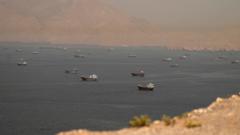
Washington is advocating for a southern shipping lane along Oman's coast, whereas Tehran desires ships to use a northern route through its waters, asserting its control and aiming to charge fees for passage. Hundreds of vessels, including oil tankers, have been blockaded in the Gulf since the strait's closure. While some ships have risked passage recently, leading to a drop in oil prices, Iran's actions, such as allegedly attacking the Panama-flagged tanker Kiku and striking a Singapore-flagged container ship with a drone, have reignited tensions.
in direct response to continued Iranian aggression against commercial shipping
Iran's Foreign Minister Abbas Araghchi reiterated Tehran's claim to sole control over the waterway during a visit to Iraq, warning that any interference would complicate efforts to reopen the strait and increase tensions. Observers suggest Iran is leveraging its ability to threaten shipping as a key negotiating tactic.
Any interference in this matter, any attempt to establish new or separate arrangements from those currently being carried out by the Islamic Republic of Iran, will only lead to further complications, delay the reopening of the strait of Hormuz, and increase the level of tension.
DistantNews Editorial
Originally published by The Guardian. Summarized and contextualized by our editorial team with added local perspective. Read our editorial standards.
More Stories


From Our Blog

What Gets Lost (and Found) When News Is Translated

The Critical Role of Diaspora Media in Global News

What Travellers Should Know About Countries with Restricted Press

A Digital Nomad's Guide to Following Local News

How the Same Story Looks Different in Different Countries
