


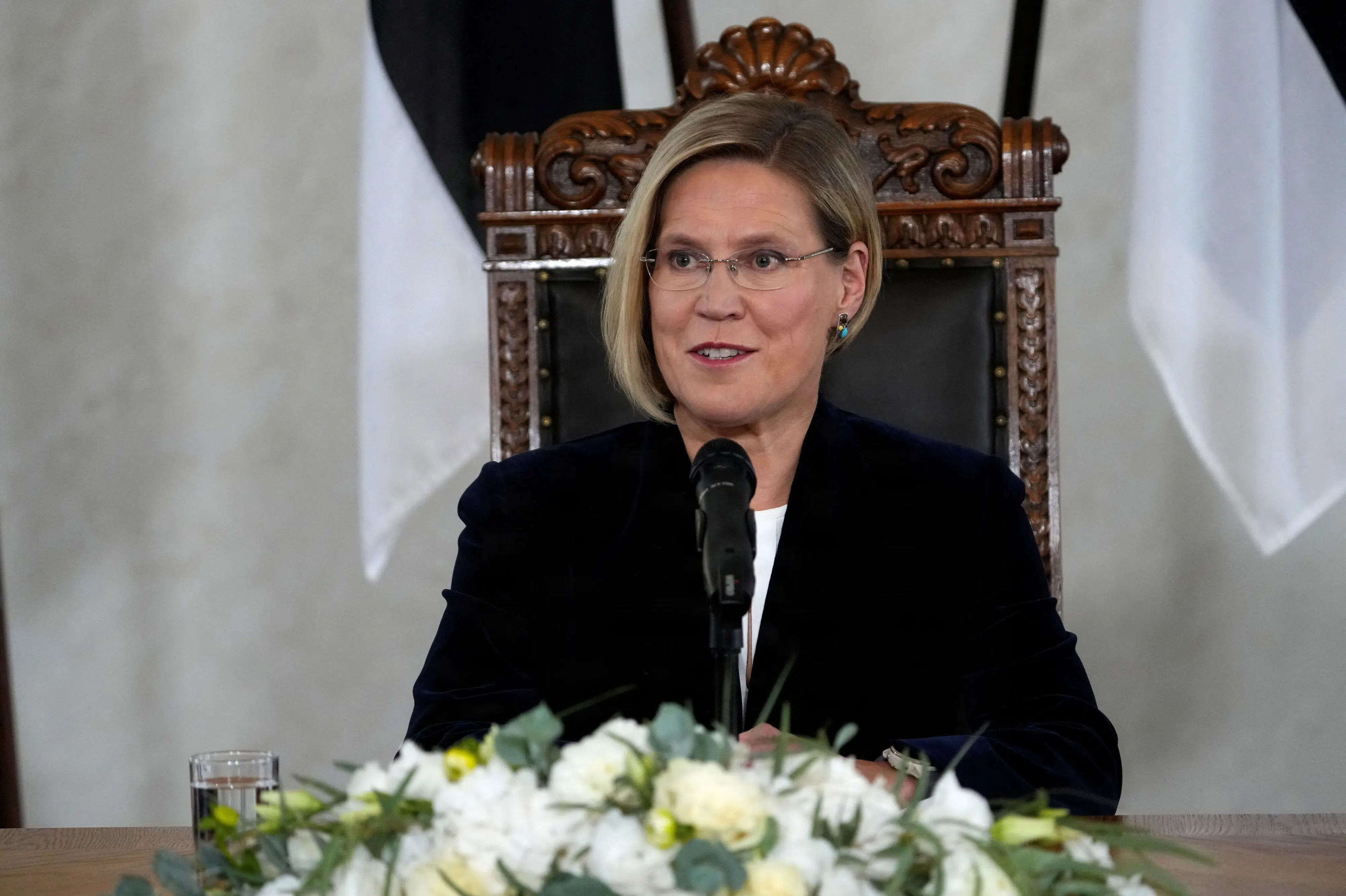
Estonia Elects Its Second Woman President in History
Translated from Danish and summarized by DistantNews. Read the original for the full story.
At a glance
Newswire
From a news agency
Outcome reported
- Estonia’s parliament elected longtime ombudsman Ülle Madise as the country’s next president.
- Madise, 51, will become Estonia’s second woman president and succeed Alar Karis.
- The largely ceremonial presidency carries formal powers including signing laws, vetoing legislation and nominating a prime minister after parliamentary elections.
Ülle Madise, Estonia’s longtime ombudsman and a lawyer, has been elected the country’s next president, making her the second woman in Estonian history to hold the office.
Parliament chose the 51-year-old Madise without an opposing candidate. She has served as Estonia’s ombudsman for human rights since 2015 and will succeed Alar Karis. The president serves a five-year term.
Estonia’s presidency is largely ceremonial because political power rests with the prime minister and government. The office still plays a formal role in the country’s lawmaking process. New laws must be signed by the president before they take effect, and the president can veto legislation.
After parliamentary elections, the president nominates the person with the strongest support in parliament to become prime minister. The president also appoints and dismisses ministers on the prime minister’s recommendation.
Estonia has 1.4 million inhabitants and borders Russia to the east. The Baltic country is one of Russia’s strongest critics and among Ukraine’s leading supporters in the European Union and NATO. Estonia plans to spend 5.4% of gross domestic product on defense this year, compared with Denmark’s expected 3.5%.
About this summary
Originally published by Berlingske in Danish. Translated, summarized, and contextualized automatically by DistantNews, with a note on how the source frames the story. Not individually reviewed before publishing. How this works.
More Stories

From Our Blog

What Gets Lost (and Found) When News Is Translated

The Critical Role of Diaspora Media in Global News

What Travellers Should Know About Countries with Restricted Press

A Digital Nomad's Guide to Following Local News

How the Same Story Looks Different in Different Countries
