

/nginx/o/2026/06/15/17719162t1hce17.jpg)
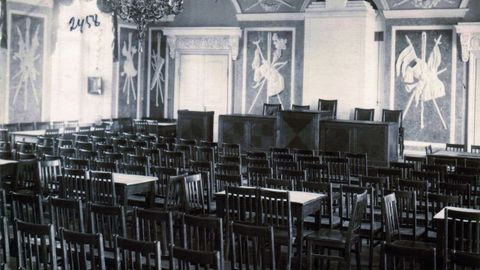
Estonia's most progressive constitution, congratulations to us.
Translated from Estonian, summarized and contextualized by DistantNews.
At a glance
News
Named sources
New plan
- Estonia celebrated the 106th anniversary of its constitution, adopted on June 15, 1920.
- The 1920 constitution is often described as the world's most modern and democratic for its time.
- Speakers at an event marking the anniversary included politicians and historians who discussed its significance and historical context.
Estonia marked the 106th anniversary of its constitution on June 15, 2026, a foundational document that has shaped the nation's democratic governance. The constitution, adopted on June 15, 1920, is celebrated for its progressive principles and is often referred to as the world's most modern and democratic charter of its era.
An event held at the Riigikogu's White Hall brought together prominent figures to commemorate the anniversary. Among the speakers were Juku-Kalle Raid, a member of the Foreign Affairs Committee; Ando Kiviberg, chairman of the Constitutional Committee; Jaak Valge, a historian and member of the Riigikogu; and Jüri Adams, recognized as a key architect of Estonia's modern constitution.
Discussions at the event highlighted the constitution's role as a social contract, where government derives its power from the people. The 1920 constitution emerged during a period of instability following Estonia's independence and the Estonian War of Independence. Its adoption by the Constituent Assembly, Estonia's first popularly elected parliament, was crucial for establishing democratic foundations for the state.
Unlike later constitutions in 1934 and 1938, the 1920 constitution was not put to a national referendum, partly due to inexperience with such processes and the urgency of the time. Nevertheless, it laid down a framework for societal functioning based on democratic principles, reflecting a clear desire to avoid a single ruler after periods of foreign domination. The constitution established a clear separation of powers, emphasizing a rejection of centralized authority.
The constitution is like a social contract with citizens, the government derives power from the people to exercise it on their behalf.
DistantNews Editorial
Originally published by Postimees in Estonian. Translated, summarized, and contextualized by our editorial team with added local perspective. Read our editorial standards.
More Stories


/nginx/o/2026/06/14/17716839t1hf8bc.jpg)
From Our Blog

What Gets Lost (and Found) When News Is Translated

The Critical Role of Diaspora Media in Global News

What Travellers Should Know About Countries with Restricted Press

A Digital Nomad's Guide to Following Local News

How the Same Story Looks Different in Different Countries
