


Estonia's Regional Policy Criticized as Capital-Centric, Widening Economic Gaps
Translated from Estonian, summarized and contextualized by DistantNews.
At a glance
Analysis
Named sources
Context piece
- Estonia's regional policy is criticized for being overly focused on the capital, Tallinn, neglecting other regions.
- This concentration of resources exacerbates economic disparities, with Tallinn's living standards far exceeding the EU average while other areas lag significantly.
- The author proposes dividing Estonia into two economic territories to better distribute EU structural funds and address regional underdevelopment.
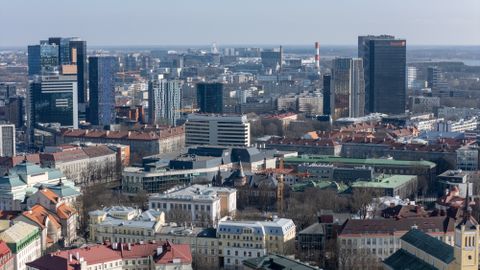
Estonia's regional policy is failing to align with European Union principles, creating a stark divide between the capital, Tallinn, and the rest of the country. While Tallinn's living standards significantly surpass the EU average, other regions hover at only 50-60 percent of it. This imbalance is attributed to a capital-centric approach that directs resources away from less developed areas.
The consequences of this policy are visible across the country, with closed shops, dwindling public services like schools and post offices, and depopulating rural areas. Residents cite a lack of jobs, distant essential services, and inadequate infrastructure, including poor internet access and unmaintained roads, as reasons for leaving.
Estonia does not follow these European Union regional policy principles, although solutions exist.
The core issue, according to Kaul Nurm, Vice President of the Estonian Chamber of Small and Medium Enterprises (EVEA), is the lack of investment capital for businesses and insufficient funds for local governments to support entrepreneurship and public services. EU aid programs, intended to help lagging regions, are predominantly channeled to Tallinn and its surrounding municipalities due to political decisions.
Estonia must end its capital-centric regional policy and start distributing European Union structural funds to our other regions as well.
Nurm argues that the benefits of the single market and free trade primarily accrue to wealthy countries and large cities. This concentration of wealth in Tallinn, measured by GDP per capita adjusted for purchasing power, has reached over 155 percent of the EU average. Consequently, Tallinn can afford the co-financing required for EU structural projects, while rural municipalities and businesses cannot.
To rectify this, Nurm proposes a solution based on an EU regulation: dividing Estonia into two economic territories. This division would allow for a more equitable distribution of EU structural funds, aiming to boost living standards and retain populations in the country's lagging regions. The proposal suggests designating Tallinn and its 'golden circle' of municipalities as one territory, and the rest of Estonia as the second.
The income from the single market and free trade is concentrated mainly in wealthy countries and large cities/metropolises. Thus, Tallinn's living standard, measured by gross domestic product per capita adjusted for purchasing power, has reached over 155 percent of the European Union average, while in regions outside the capital's 'golden circle,' it is 50–60 percent.
DistantNews Editorial
Originally published by Postimees in Estonian. Translated, summarized, and contextualized by our editorial team with added local perspective. Read our editorial standards.
More Stories
/nginx/o/2026/06/10/17705655t1he565.jpg)
/nginx/o/2026/06/10/17704621t1hc50a.jpg)
From Our Blog

What Gets Lost (and Found) When News Is Translated

The Critical Role of Diaspora Media in Global News

What Travellers Should Know About Countries with Restricted Press

A Digital Nomad's Guide to Following Local News

How the Same Story Looks Different in Different Countries
