

/nginx/o/2020/01/08/12859012t1h47d9.jpg)
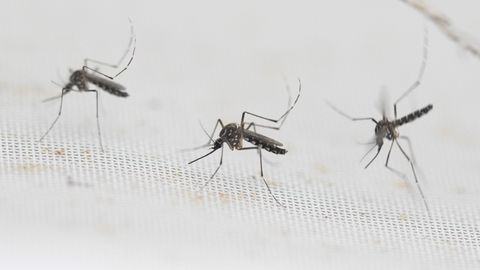
Estonia's Summer Could Be Less Annoying: Mosquitoes Significantly Down
Translated from Estonian, summarized and contextualized by DistantNews.
At a glance
News
Sources not specified
Context piece
- Mosquito numbers in Estonia are significantly lower this year compared to normal, with some reporting over 100 times fewer.
- An entomology professor notes seeing only about a dozen mosquitoes all season.
- Despite the low numbers, experts warn that climate change poses a long-term threat to agriculture.
Estonians are enjoying a remarkably mosquito-free summer this year, a stark contrast to typical seasons. Professor Tiit Teder, an associate professor of entomology at the University of Tartu, estimates that mosquito populations could be more than 100 times lower than usual.
"From my own experience, I would say that compared to a normal year, the number of mosquitoes could easily be more than 100 times lower," Teder stated. He added that while normally one might encounter numerous mosquitoes at once, this year he has personally seen or heard only about a dozen buzzing around him throughout the entire season.
From my own experience, I would say that compared to a normal year, the number of mosquitoes could easily be more than 100 times lower.
This significant reduction in mosquito activity has allowed Estonians to enjoy the outdoors with minimal annoyance. However, the article also touches upon a broader concern for the country's agriculture: the long-term threat posed by climate change. Experts warn that if measures are not taken, a substantial portion of agricultural land could be rendered unusable by the mid-century due to unpredictable climate shifts.
While the current lack of mosquitoes is a welcome reprieve, the underlying issue of climate change and its potential impact on food production remains a critical concern for the future.
If we continue like this, by the middle of the century, we will have only 6.4 percent of agricultural land that has not been destroyed by the capricious climate, so tons of fertilizer will not help us.
DistantNews Editorial
Originally published by Postimees in Estonian. Translated, summarized, and contextualized by our editorial team with added local perspective. Read our editorial standards.
More Stories
/nginx/o/2025/07/30/17039720t1h69d1.jpg)
From Our Blog

What Gets Lost (and Found) When News Is Translated

The Critical Role of Diaspora Media in Global News

What Travellers Should Know About Countries with Restricted Press

A Digital Nomad's Guide to Following Local News

How the Same Story Looks Different in Different Countries
