

/nginx/o/2026/07/06/17767417t1hc477.jpg)
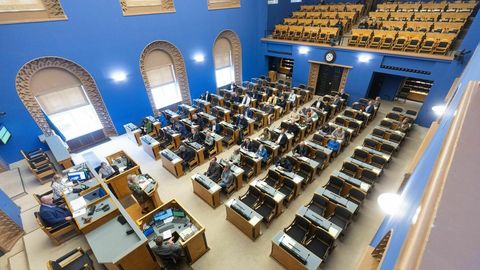
Estonian MPs launch protest letter to China over minority assimilation law
Translated from Estonian, summarized and contextualized by DistantNews.
At a glance
News
Named sources
New plan
- The chairman of the Estonian parliamentary group for Tibet, along with nearly half of the parliament members, initiated a protest letter to the Chinese embassy.
- The letter protests a new Chinese law that aims to assimilate ethnic minorities like Tibetans, Uyghurs, and Mongols.
- The group argues the law, despite its name, seeks to erase Tibetan identity and dissolve it from local governance, schools, and communities.
The chairman of Estonia's parliamentary group for Tibet, Juku-Kalle Raid, has spearheaded a protest letter addressed to the Chinese embassy, signed by nearly fifty members of the Riigikogu (parliament). This initiative stems from a new law enacted in China at the beginning of July, which the group believes is designed to assimilate ethnic minorities residing within Chinese territory, including Tibetans, Uyghurs, and Mongols.
Raid stated that the law, despite being named the "Law on Promoting Ethnic Unity and Progress," fundamentally aims to erase Tibetan identity. He elaborated that the legislation imposes far-reaching mandates intended to dissolve Tibetan identity across various levels, from local governance to educational institutions and community structures.
The protest signifies a strong stance by Estonian lawmakers against perceived cultural assimilation policies targeting minority groups within China. The signatories express deep concern over the potential impact of the new law on the distinct cultural and social fabric of these communities, particularly Tibetans.
The law has a subtle name, 'Law on Promoting Ethnic Unity and Progress,' but its content is to erase Tibetan identity and establish far-reaching mandates aimed at dissolving Tibetan identity from local governments to Tibetan schools and communities.
DistantNews Editorial
Originally published by Postimees in Estonian. Translated, summarized, and contextualized by our editorial team with added local perspective. Read our editorial standards.
More Stories


/nginx/o/2026/07/06/17767249t1h1700.jpg)
From Our Blog

What Gets Lost (and Found) When News Is Translated

The Critical Role of Diaspora Media in Global News

What Travellers Should Know About Countries with Restricted Press

A Digital Nomad's Guide to Following Local News

How the Same Story Looks Different in Different Countries
