

EU Budget: German Bundesrat President finds government's demands difficult
Translated from German, summarized and contextualized by DistantNews.
At a glance
News
From a news agency
New plan
- German Bundesrat President Andreas Bovenschulte expressed reservations about the German government's push for significant cuts to the next long-term EU budget.
- Bovenschulte argued that regions need a stronger say in the EU's financial planning, emphasizing the link between social cohesion and competitiveness.
- The German government, led by Chancellor Friedrich Merz, advocates for a smaller budget than proposed by the EU Commission, reportedly around 400 billion euros, while Bovenschulte stresses the importance of cohesion funds.
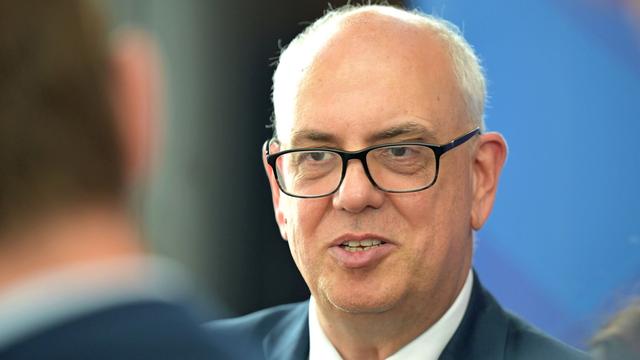
Bundesrat President Andreas Bovenschulte has voiced concerns regarding the German government's strong push for deep cuts to the upcoming long-term EU budget. While acknowledging the government's primary role in foreign policy, Bovenschulte stated that the proposal is "difficult" from the perspective of Germany's federal states (Länder).
From the perspective of the federal states, this is a difficult proposal.
Chancellor Friedrich Merz recently advocated for a significantly smaller EU budget for the period of 2028-2034 compared to the European Commission's proposal. Reports suggest an internal German government paper outlines a figure around 400 billion euros, though this is not yet an official government position. Bovenschulte indicated that this proposal requires further discussion.
I think we must discuss this and talk about it.
The EU budget is a highly sensitive political issue, with negotiations currently underway for the 2028-2034 period. The European Commission has proposed a budget of approximately 1.76 trillion euros (adjusted for inflation), intended for various initiatives including defense, agriculture, structural development, and the Erasmus exchange program. Germany, as the EU's largest economy, contributes the largest share to this budget, primarily funded by member states' gross national income.
We must not see the improvement of competitiveness and cohesion as opposites.
Bovenschulte challenged the notion of viewing competitiveness and cohesion as opposing forces. He asserted that a strong social fabric is essential for European competitiveness, warning that a divided Europe cannot be competitive. He expressed strong criticism of proposals that would allocate insufficient funds to cohesion policy, emphasizing its importance for maintaining European unity and stability.
Without this, Europe will fall apart - and then there will be no competitive European Union.
DistantNews Editorial
Originally published by Die Zeit in German. Translated, summarized, and contextualized by our editorial team with added local perspective. Read our editorial standards.
More Stories


From Our Blog

What Gets Lost (and Found) When News Is Translated

How the Same Story Looks Different in Different Countries

The Critical Role of Diaspora Media in Global News

What Travellers Should Know About Countries with Restricted Press

A Digital Nomad's Guide to Following Local News
