


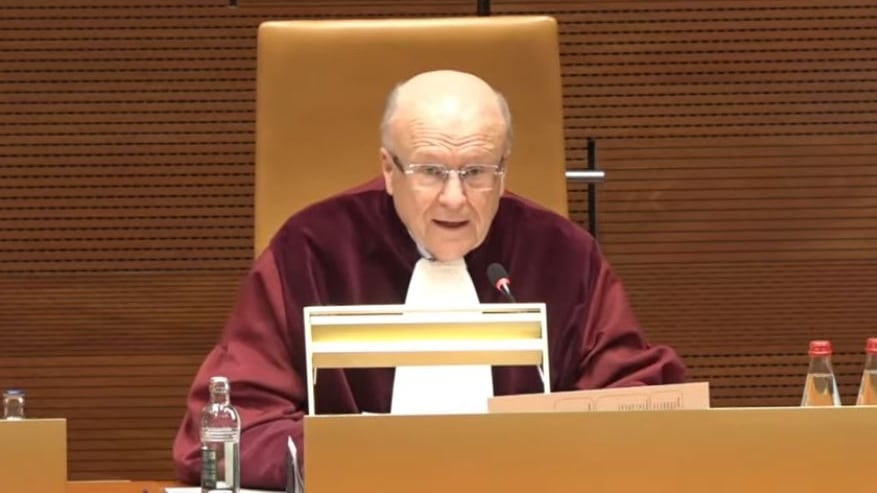
EU Court to Rule on Spain's Catalan Amnesty Law
Translated from Spanish, summarized and contextualized by DistantNews.
At a glance
News
Sources not specified
In the courts
- The EU Court of Justice is issuing a ruling on Spain's amnesty law for Catalan independence offenses.
- The law covers crimes like embezzlement and terrorism, with a key focus on figures like Carles Puigdemont.
- The ruling will impact ongoing legal cases and potentially Puigdemont's return to Spain.
The European Union's Court of Justice is set to deliver its verdict on Spain's controversial amnesty law, which seeks to pardon offenses related to the Catalan independence movement. The ruling, expected to be read from 10:00 a.m., will determine whether the forgiveness of crimes such as embezzlement and terrorism aligns with European standards.
The Luxembourg-based court will address preliminary questions raised by Spain's Court of Auditors regarding the accounting responsibilities for the "procés" expenses. This case directly affects former Catalan presidents Carles Puigdemont and Artur Mas. Additionally, the National Court's referral concerning terrorism charges against the Committees for the Defense of the Republic (CDR) will be considered.
This judgment is also crucial for the Constitutional Court, which must rule on Puigdemont's appeal against the Supreme Court's decision not to grant amnesty for embezzlement. Such a decision could be pivotal for his potential return to Spain.
European judges will base their ruling on the opinion issued by EU Advocate General Dean Spielmann on November 13. Spielmann previously dismissed concerns that Catalan independence would affect European finances, stating Spain's contribution to the EU budget would remain proportional. He also noted that the Court of Auditors did not indicate EU funds were used for the "procés." Furthermore, he found no conflict with the EU's anti-terrorism directive, as the law adheres to European human rights standards and excludes crimes against life and physical integrity.
However, Spielmann did question the two-month deadline imposed by the amnesty law for Spanish judges to decide on its application in ongoing cases. While these considerations are not binding, they often align with the final judgments of the European court.
DistantNews Editorial
Originally published by El País in Spanish. Translated, summarized, and contextualized by our editorial team with added local perspective. Read our editorial standards.
More Stories



From Our Blog

What Gets Lost (and Found) When News Is Translated

The Critical Role of Diaspora Media in Global News

What Travellers Should Know About Countries with Restricted Press

A Digital Nomad's Guide to Following Local News

How the Same Story Looks Different in Different Countries
