

EU leaders at Balkan summit optimistic about rapid expansion
Summarized and contextualized by DistantNews.
At a glance
News
Sources not specified
New plan
- EU leaders met in Montenegro to discuss accelerating the bloc's expansion, particularly in the Western Balkans.
- A Franco-German initiative aims to speed up accession by offering incentives for faster reforms, including potential observer status in EU bodies.
- EU leaders emphasized enlargement as a geostrategic imperative for peace, stability, and security, responding to geopolitical challenges from Russia and China.
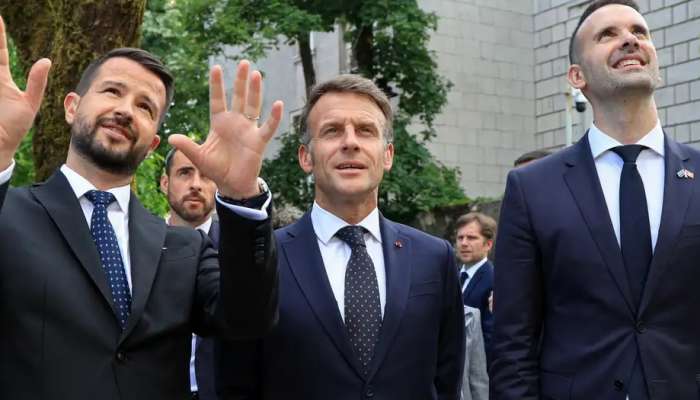
Leaders from European Union countries convened in Tivat, Montenegro, for their annual summit focused on expanding the bloc, with a particular emphasis on the Western Balkans. The meeting signaled a renewed push to integrate the region, seen as a geostrategic priority in the face of evolving geopolitical landscapes.
German Chancellor Friedrich Merz expressed optimism about a joint Franco-German proposal designed to inject new momentum into the accession process. This initiative seeks to incentivize candidate countries to implement reforms more rapidly. Potential benefits for accelerated integration could include observer status in EU bodies, advanced access to the Euro payment area, and inclusion in single-rate cross-border data roaming.
Enlargement is for us a geostrategic imperative, as well as a long-term investment in our peace, our stability and our security.
European Commission President Ursula von der Leyen underscored the urgency, stating that the EU must make the enlargement process both faster and more credible. "Enlargement is for us a geostrategic imperative, as well as a long-term investment in our peace, our stability and our security," she remarked, calling for a more dynamic accession process.
We will now launch a gradual process.
French President Emmanuel Macron highlighted the region's significance for the EU's energy and security interests, as well as migration routes. He suggested that candidate countries aligning with specific EU criteria could gain access to certain bloc formats, such as Council meetings. European Council President Antonio Costa echoed these sentiments, calling Western Balkan enlargement a "geostrategic necessity for Europe" that requires intensified efforts.
Montenegro, having pursued EU membership for 22 years, is considered the frontrunner among the six Western Balkan candidate countries. The nation has already adopted the euro and joined NATO. With strong public support for accession, Montenegro appears poised to lead the next wave of EU enlargement, a move leaders believe is crucial for regional stability and European security.
It is not just an opportunity; it is a geostrategic necessity for Europe. And for this we need to work harder and faster.
DistantNews Editorial
Originally published by Times of Oman. Summarized and contextualized by our editorial team with added local perspective. Read our editorial standards.
More Stories

From Our Blog

What Gets Lost (and Found) When News Is Translated

The Critical Role of Diaspora Media in Global News

What Travellers Should Know About Countries with Restricted Press

A Digital Nomad's Guide to Following Local News

How the Same Story Looks Different in Different Countries
