

/s3/static.nrc.nl/wp-content/uploads/2026/07/29133523/290726ECO_2035548402_.jpg)
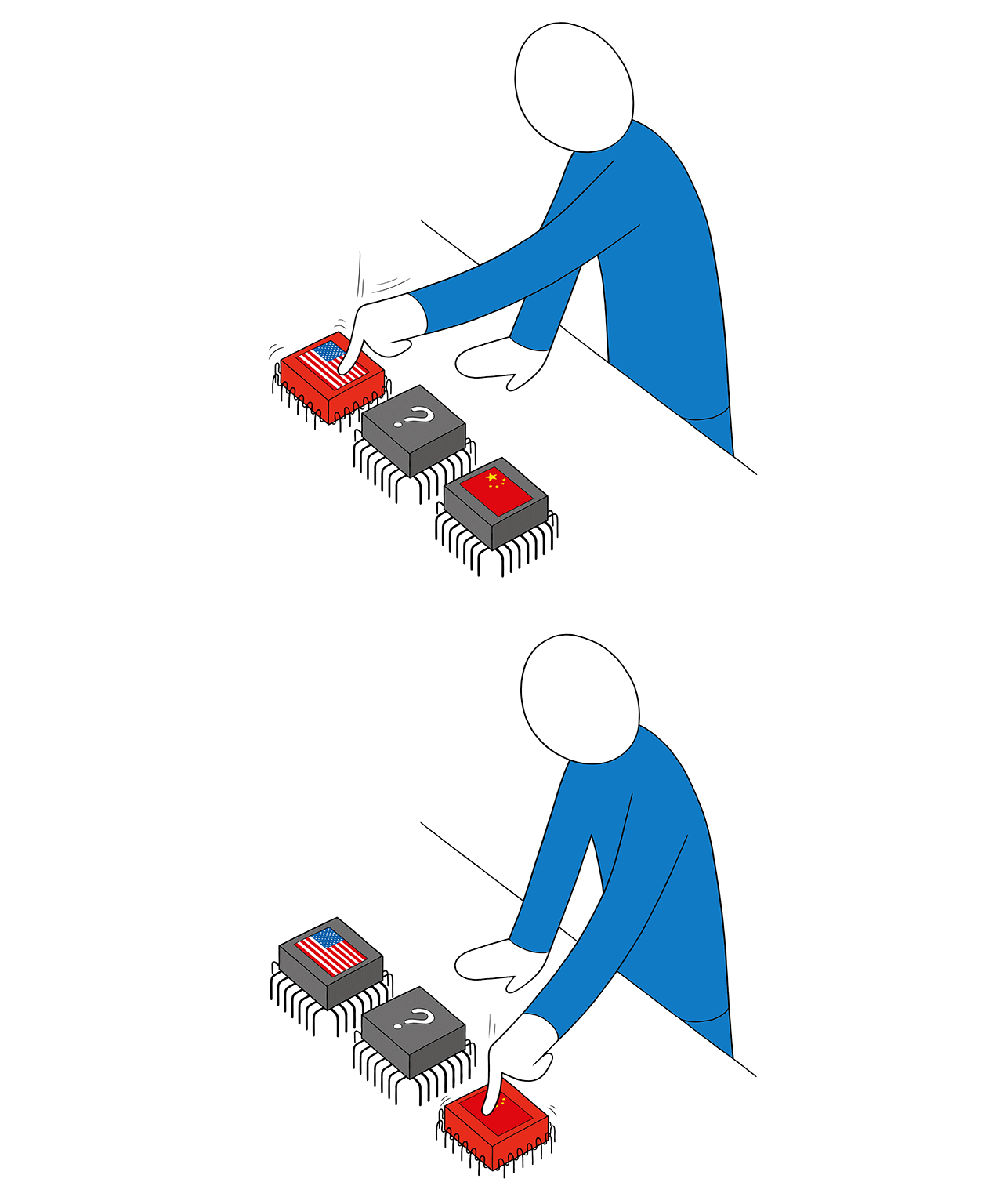
Europe eyes China's open approach in AI race, challenging US alliance
Translated from Dutch, summarized and contextualized by DistantNews.
At a glance
News
Sources not specified
Context piece
- Europe is reconsidering its reliance on the United States in the AI race, exploring potential collaboration with China.
- While the US and Europe pursue protectionist policies, China offers an open-source approach to AI development, making its models attractive to European developers.
- This shift challenges traditional alliances and prompts a re-evaluation of Europe's technological sovereignty strategy.
Europe is navigating a complex geopolitical landscape in the artificial intelligence race, prompting a critical re-evaluation of its long-standing alliance with the United States. The recent 'Pax Silica' initiative, signed by the Netherlands, aims to create an independent AI supply chain without Chinese dependency, particularly concerning rare metals crucial for chip manufacturing. Despite Europe's desire for technological independence from the US, it is hesitantly participating in this American-led pact.
Traditionally, the US has symbolized Western values, open markets, and free trade, while China has been viewed as restrictive and threatening. However, the dynamics are shifting, especially in AI. Sanne van der Lugt, a researcher at Asia Centre Leiden, notes that the roles have reversed, with China adopting a "smart 'open' approach" to AI development, contrasting with the protectionist policies of the US and Europe.
The roles have been reversed. And that is nowhere as clear and urgent as with AI.
Chinese AI developers are making significant strides, with their models rivaling American counterparts in performance at a fraction of the cost. Crucially, Chinese companies are publishing detailed information about their AI models, making them freely available as open-source. This accessibility is highly appealing to European software developers who lack their own AI models. The embrace of "open source" aligns with Europe's recently published strategy for greater technological sovereignty.
The evolving situation creates a paradoxical linguistic shift, where "open" is now associated with China and "closed" with American companies. Van der Lugt observes that "open source is closer to socialist values," while "capitalism suits closed systems." This ideological alignment suggests that Europe might find the Chinese approach to AI development more compatible with its own strategic goals than the protectionist stance of the US.
Open source is closer to socialist values. Capitalism suits closed systems.
DistantNews Editorial
Originally published by NRC Handelsblad in Dutch. Translated, summarized, and contextualized by our editorial team with added local perspective. Read our editorial standards.
More Stories
/s3/static.nrc.nl/wp-content/uploads/2026/07/29155850/290726ECO_2035565997_amodei.jpg)
/s3/static.nrc.nl/wp-content/uploads/2026/07/28143405/280726ECO_2035530150_chipAIchina.jpg)
/s3/static.nrc.nl/wp-content/uploads/2026/07/09170744/160726BIN_2035107380_HAC06.jpg)
From Our Blog

What Gets Lost (and Found) When News Is Translated

The Critical Role of Diaspora Media in Global News

What Travellers Should Know About Countries with Restricted Press

A Digital Nomad's Guide to Following Local News

How the Same Story Looks Different in Different Countries
