


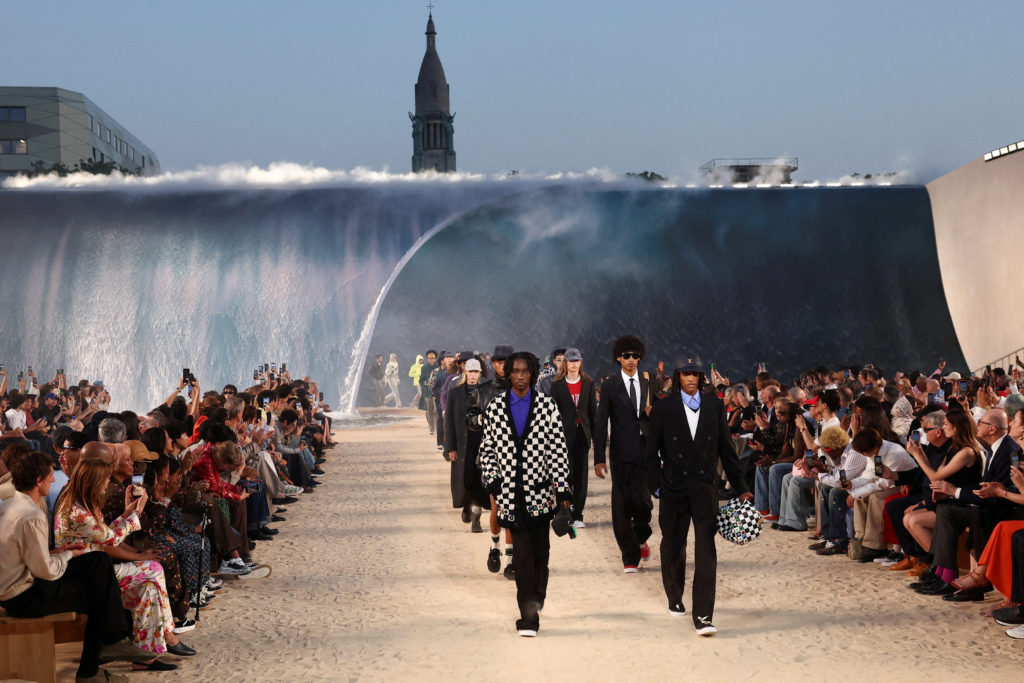
Europe's fashion industry unprepared for heat as models brave Paris shows in wool and fur
Translated from English, summarized and contextualized by DistantNews.
At a glance
News
From a news agency
Context piece
- Paris Fashion Week attendees struggled with a historic heat wave, relying on ice packs and mist machines for relief.
- Organizers faced challenges keeping guests cool in venues lacking adequate air conditioning, with some considering rationing water.
- The event highlighted the industry's vulnerability to climate change, prompting questions about staging fashion shows in peak summer.
Paris Fashion Week attendees found ice packs to be the season's most coveted accessory as a historic heat wave gripped the French capital. Fashion houses scrambled to provide relief with mist machines, chilled towels, and iced water, but these measures often proved insufficient. Guests endured sweltering conditions in packed, historic venues lacking adequate air conditioning. At one show, organizers even contemplated withholding water due to a shortage of non-plastic bottles.
I honestly thought I was going to pass out.
This year's event underscored the significant challenges posed by climate change to the global luxury industry, a major French export. The extreme temperatures, nearing 41 degrees Celsius (106 Fahrenheit) in Paris, pushed France into emergency mode, with hospitals preparing for heat-related illnesses. Like the Louvre, which had to cut hours due to its building's vulnerability to climate change, fashion week exposed how prestige institutions struggle when the weather clashes with their infrastructure and schedule.
Paris Fashion Week is the canary in the mine.
"Paris Fashion Week is the canary in the mine," remarked Ben Freeman, a London-based fashion critic from Australia, highlighting the industry's broader vulnerability. The contradiction was stark: while the industry imagined future fashion, attendees battled the present heat. Models showcased unseasonable leather, neoprene, wool, and fur collections, even as guests sought refuge from the sweltering conditions. Jonathan Anderson of Dior acknowledged the calendar's disconnect, citing fractured delivery cycles that bear "no relation to the season outside."
The calendar does not make any sense.
Some industry insiders suggested canceling fashion shows during the hottest months. "In Paris, we don't have AC everywhere, it's quite rare," noted Thomas Levy, a 24-year-old fashion student. Pascal Morand, head of France's fashion federation, stated organizers were adhering to government heat-wave plans and were "conscious of the challenges and very attentive to preserving the Fashion Week experience in this context of structural change."
In Paris we don't have AC everywhere, it's quite rare.
DistantNews Editorial
Originally published by PBS NewsHour in English. Translated, summarized, and contextualized by our editorial team with added local perspective. Read our editorial standards.
More Stories


From Our Blog

How the Same Story Looks Different in Different Countries

What Gets Lost (and Found) When News Is Translated

The Critical Role of Diaspora Media in Global News

What Travellers Should Know About Countries with Restricted Press

A Digital Nomad's Guide to Following Local News
