


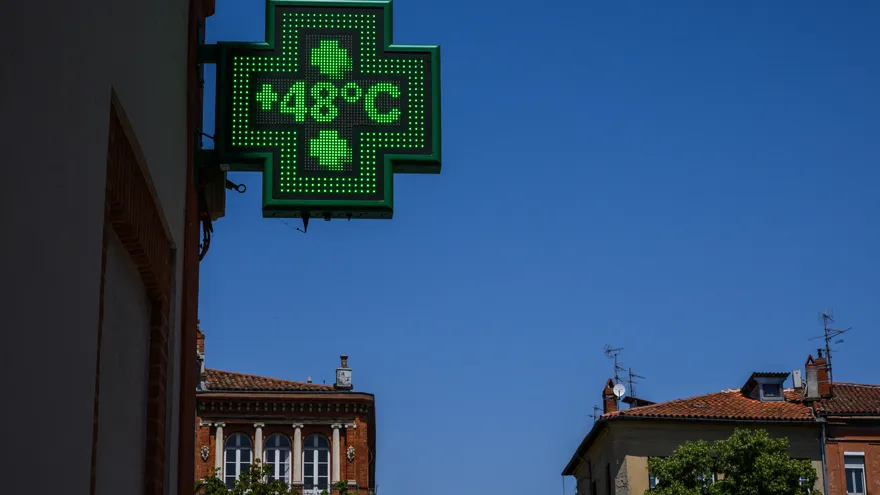
Europe's heatwave shifts to Balkans, sparking wildfires
Translated from Spanish, summarized and contextualized by DistantNews.
At a glance
News
Sources not specified
Context piece
- A severe heatwave gripping Europe has moved into the Balkans, with temperatures exceeding 38 degrees Celsius in several regions and sparking wildfires.
- Authorities in Bosnia and Albania are bracing for temperatures up to 40 degrees Celsius, while Kosovo anticipates 38 degrees Celsius, urging vulnerable populations to stay indoors.
- The heatwave has caused over 1,300 additional deaths in Europe since June 21, according to the WHO, with scientists linking its intensity to climate change.
Europe's relentless heatwave has now settled over the Balkans, bringing scorching temperatures above 38 degrees Celsius and igniting wildfires. Croatia has issued dangerous condition warnings, while Bosnia and Albania anticipate highs of 40 degrees Celsius. In Bosnia, firefighters in the south near Mostar managed to control a multi-day landfill fire that had been emitting dense, irritating smoke.
The heatwave that is hitting Europe arrived this Monday in the Balkans, where temperatures above 38 ºC in several regions have caused forest fires.
Kosovo's meteorological service forecasts temperatures reaching 38 degrees Celsius on Monday, advising vulnerable individuals to remain indoors during the day. While Western European nations have implemented emergency measures like school closures and festival cancellations, similar actions have not yet been seen in the Balkans, as the school year has concluded.
In Bosnia, near Mostar (south), firefighters reported that they managed to control a fire that had been active for several days in a landfill and was generating dense and irritating smoke.
Meanwhile, in Poland, parts of the country remain on alert after a historically hot period resulted in 17 drowning deaths. The nation recorded an all-time high of 40.5 degrees Celsius in Slubice on Sunday. The World Health Organization reports over 1,300 additional heat-related deaths across Europe since June 21. Scientists emphasize that this intense heatwave, the most severe recorded in Europe, would have been virtually impossible without the impact of climate change.
In Kosovo, the meteorological service announced that temperatures could reach 38 ºC this Monday, and recommended that the most vulnerable people remain indoors during the day.
DistantNews Editorial
Originally published by TVN Panamá in Spanish. Translated, summarized, and contextualized by our editorial team with added local perspective. Read our editorial standards.
More Stories



From Our Blog

What Gets Lost (and Found) When News Is Translated

The Critical Role of Diaspora Media in Global News

What Travellers Should Know About Countries with Restricted Press

A Digital Nomad's Guide to Following Local News

How the Same Story Looks Different in Different Countries
