


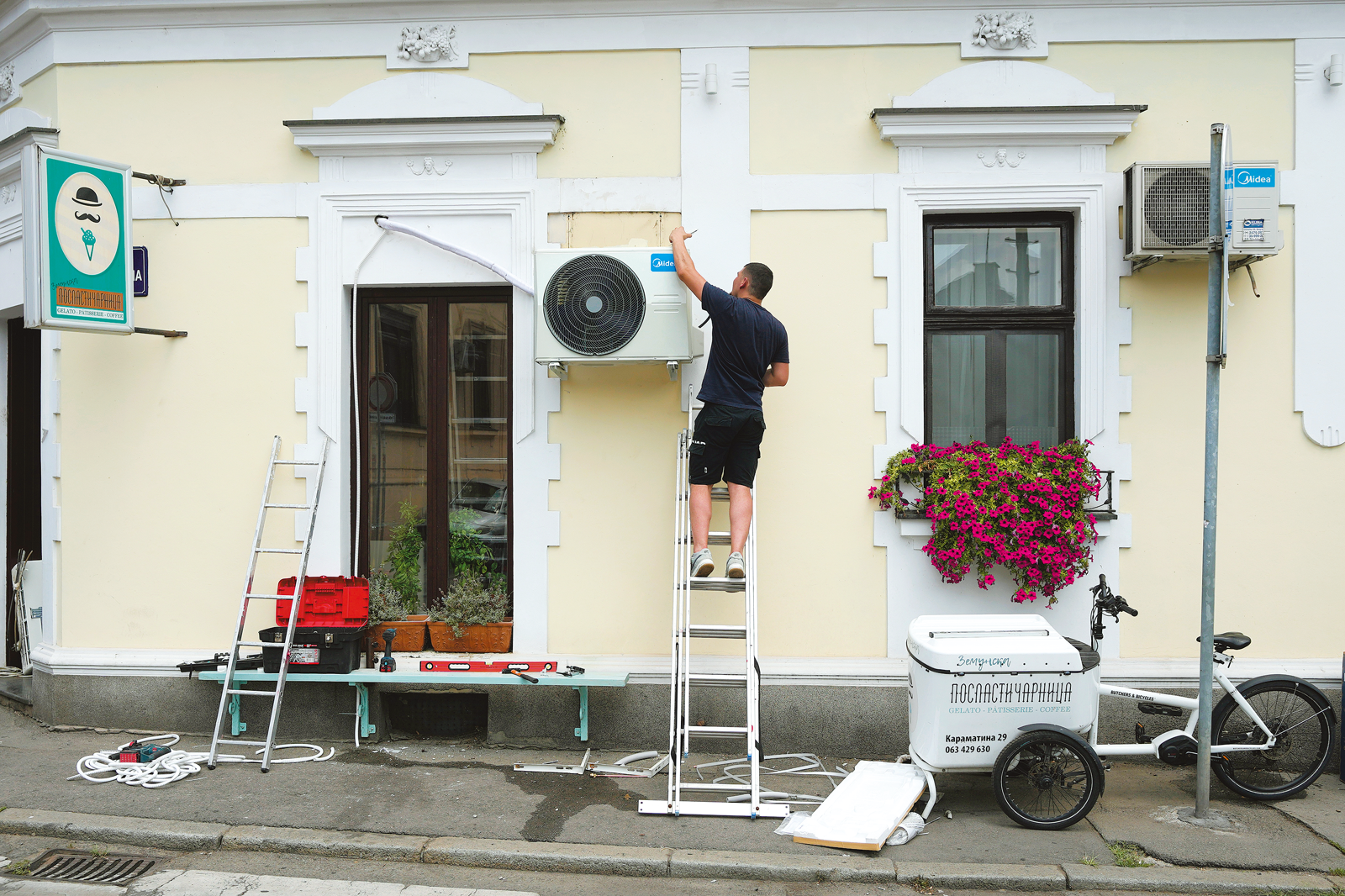
Europe's Heatwave Sparks "Air Conditioner Ideology War"
Translated from Korean, summarized and contextualized by DistantNews.
At a glance
News
Sources not specified
Context piece
- Europe is experiencing an "air conditioner ideology war" as record heatwaves fuel political and social divisions.
- Online discussions and social media posts are linking air conditioner use to far-right ideologies, with some images depicting Hitler with air conditioners.
- The debate over air conditioner accessibility and climate response policies is polarizing European politics and citizens, with some demanding practical solutions for extreme heat.
Europe is caught in an "air conditioner ideology war" as record-breaking heatwaves ignite political and social conflict. Online, discussions are increasingly linking air conditioner usage to far-right political leanings, with some social media posts even featuring doctored images of Hitler alongside air conditioning units. This baseless claim suggests that those who use air conditioners are far-right sympathizers.
The debate over air conditioner accessibility and broader climate response policies has become a significant point of contention across the continent. Citizens are aligning with political parties based on their stances on these issues, creating sharp divisions. The extreme heat is no longer just a natural disaster; it has become a catalyst for deep-seated political and social friction.
One individual, Vincent Duvallet, who lost his grandparents during a recent heatwave, expressed frustration. "I can tolerate many things, but I cannot understand why hospitals or nursing homes lack air conditioning," he stated. Duvallet emphasized his intention to support candidates in the next election who propose effective heatwave対策, including the relaxation of air conditioner regulations. This sentiment highlights a growing demand for practical solutions to combat the escalating threat of extreme temperatures.
I can tolerate many things, but I cannot understand why hospitals or nursing homes lack air conditioning.
DistantNews Editorial
Originally published by Dong-A Ilbo in Korean. Translated, summarized, and contextualized by our editorial team with added local perspective. Read our editorial standards.
More Stories


From Our Blog

What Gets Lost (and Found) When News Is Translated

The Critical Role of Diaspora Media in Global News

What Travellers Should Know About Countries with Restricted Press

A Digital Nomad's Guide to Following Local News

How the Same Story Looks Different in Different Countries
