


Europe's Summer Drought Threatens Fish in Rivers, Lakes and Farms
Summarized by DistantNews. Read the original for the full story.
At a glance
News
From a news agency
Context piece
- Extreme drought and heat across Europe have severely impacted rivers, lakes, and fish farms, threatening fish populations with rising temperatures and shrinking water bodies.
- Countries and businesses are unprepared for the crisis, prompting discussions on minimizing future extreme weather event impacts, which scientists link to climate change.
- Hungary and Romania report significant losses in fish farming due to dried-out ponds and water shortages, with recovery potentially taking years.
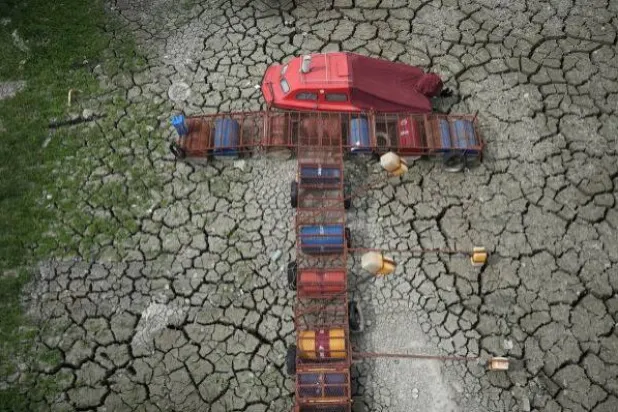
Small boats lie idle on cracked earth in a shrinking side channel of the Danube River in northern Serbia. The water has receded into a few small ponds, with fish crowded into the shallow, warm water. "This is all we have, these two little ponds that are full of juvenile fish," said fisherman Dusan Jovanovic. He warned that the fish are in danger due to the low water levels and temperatures exceeding 30 degrees Celsius (86 degrees Fahrenheit). "If they start to die, they will all die at once," he added.
This summer's relentless drought and heat have devastated ecosystems and businesses throughout the region. From a lake in Slovenia and the Danube in Serbia to fish farms in Bosnia, the Czech Republic, Romania, and Hungary, the impact is widespread. The fish industry alone faces estimated losses in the millions of euros, compounding existing problems with energy and water supplies, crop failures, and disruptions to river traffic and trade, according to The Associated Press.
This is all we have, these two little ponds that are full of juvenile fish
Unprepared for this year's crisis, nations and businesses are now considering strategies to mitigate the effects of future extreme weather events, which scientists attribute to human-induced climate change. In Hungary, nearly 99% of the land is experiencing severe or extreme drought. Desertification threatens the Great Hungarian Plain, impacting approximately 67,000 acres of fish ponds. The Agriculture and Food Economy Ministry reported that 3,924 acres of these ponds have dried out, leading to the deaths of nearly 280 metric tons of fish across 20 farms, with an estimated revenue loss of $4.2 million. Producers indicate that replacing the lost fish could take years.
Romanian fish farmers, particularly those raising carp, are facing a repeat of severe droughts experienced in 2023 and 2024. Catalin Platon, president of the ROMFISH National Association of Fish Producers, noted that the three-to-four-year production cycle for carp means losses from previous years continue to affect the industry. He criticized water-use policies that prioritized irrigation for agriculture, leaving insufficient water for fish farms.
If they start to die, they will all die at once
About this summary
Originally published by Asharq Al-Awsat. Summarized and contextualized automatically by DistantNews, with a note on how the source frames the story. Not individually reviewed before publishing. How this works.
More Stories


From Our Blog

What Gets Lost (and Found) When News Is Translated

The Critical Role of Diaspora Media in Global News

What Travellers Should Know About Countries with Restricted Press

A Digital Nomad's Guide to Following Local News

How the Same Story Looks Different in Different Countries
