

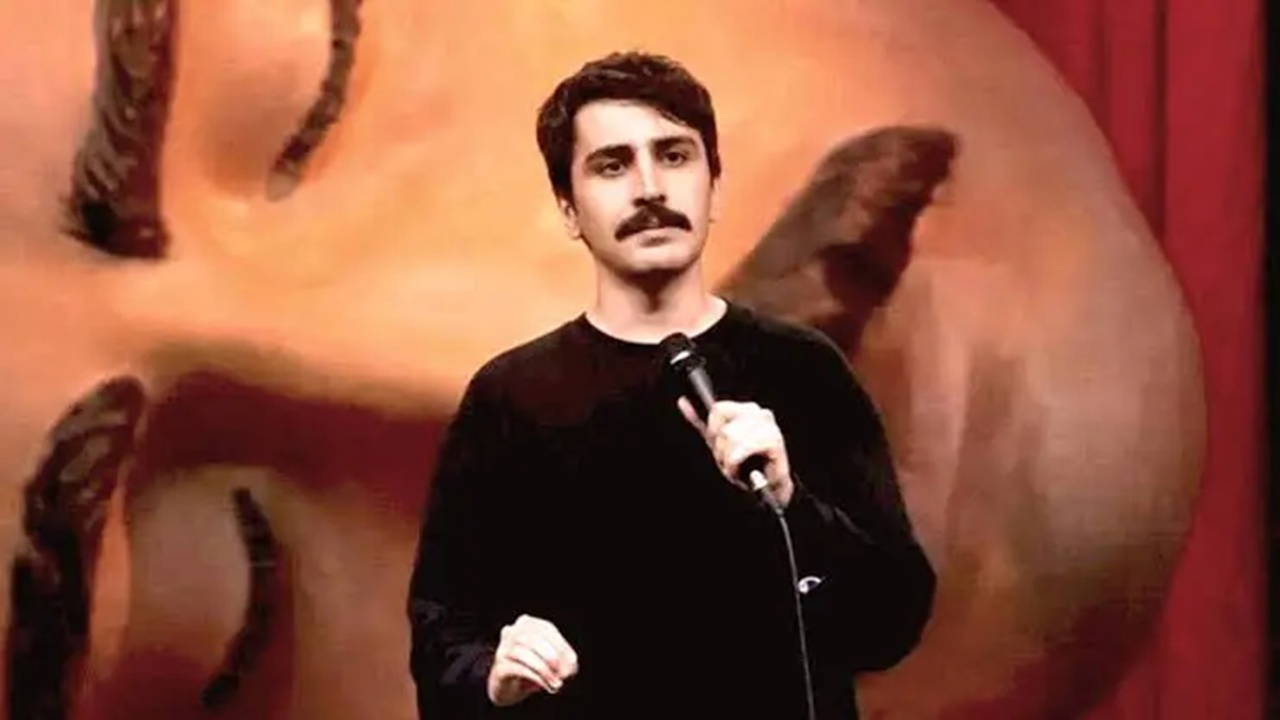
European artists demand release of comedian Deniz Göktaş
Translated from Turkish, summarized and contextualized by DistantNews.
At a glance
News
Named sources
New plan
- Over a hundred writers, artists, and journalists living in Europe have signed a joint statement demanding the immediate release of comedian Deniz Göktaş.
- The signatories emphasize that freedom of thought, expression, and humor are essential components of democratic societies.
- They argue that punishing artists for critical or humorous expression violates fundamental legal principles and Article 10 of the European Convention on Human Rights, calling for the reconsideration of Göktaş's arrest warrant.
A coalition of over a hundred writers, artists, and journalists based in Germany, Belgium, the Netherlands, Austria, Sweden, and France have issued a joint statement calling for the immediate release of comedian Deniz Göktaş. Among the prominent signatories are Germany's first Turkish-origin cabaret artist Şinasi Dikmen, theater actors, folk singers, rapper Ezhel, and journalists including Can Dündar.
We see freedom of thought and expression, art and humor as inseparable parts of democratic life.
The statement underscores the vital role of freedom of thought, expression, and humor in democratic societies. The signatories assert that punishing artists for their critical and humorous expressions contravenes the fundamental principles of law and Article 10 of the European Convention on Human Rights, which protects freedom of speech.
Humor that makes society think and question while making it laugh is one of the indispensable elements of democratic life.
Expressing deep concern over the arrest warrant issued for Deniz Göktaş, the group argues that such a decision is worrying from the perspective of freedom of expression. They urge for a reassessment of the decision and the immediate release of Göktaş within the framework of fundamental rights and freedoms.
Areas of criticism, humor, and art are not areas to be punished in democratic societies, but areas to be protected.
The statement further elaborates that humor, which provokes thought and questioning while bringing laughter, is an indispensable element of democratic life. Artists and humorists have historically produced works criticizing power, social contradictions, and daily life, making their contributions a crucial area of freedom of expression. The signatories stress that criticism, humor, and art should be protected, not punished, in democratic societies, and that disagreement with an idea cannot be a justification for silencing it through criminal sanctions.
Freedom of expression, according to Article 10 of the European Convention on Human Rights, to which Turkey is also a party, is the guarantee not only of opinions that are liked or considered harmless, but also of expressions that are disturbing, critical, and humorous.
DistantNews Editorial
Originally published by Cumhuriyet in Turkish. Translated, summarized, and contextualized by our editorial team with added local perspective. Read our editorial standards.
More Stories


From Our Blog

What Gets Lost (and Found) When News Is Translated

The Critical Role of Diaspora Media in Global News

What Travellers Should Know About Countries with Restricted Press

A Digital Nomad's Guide to Following Local News

How the Same Story Looks Different in Different Countries
