


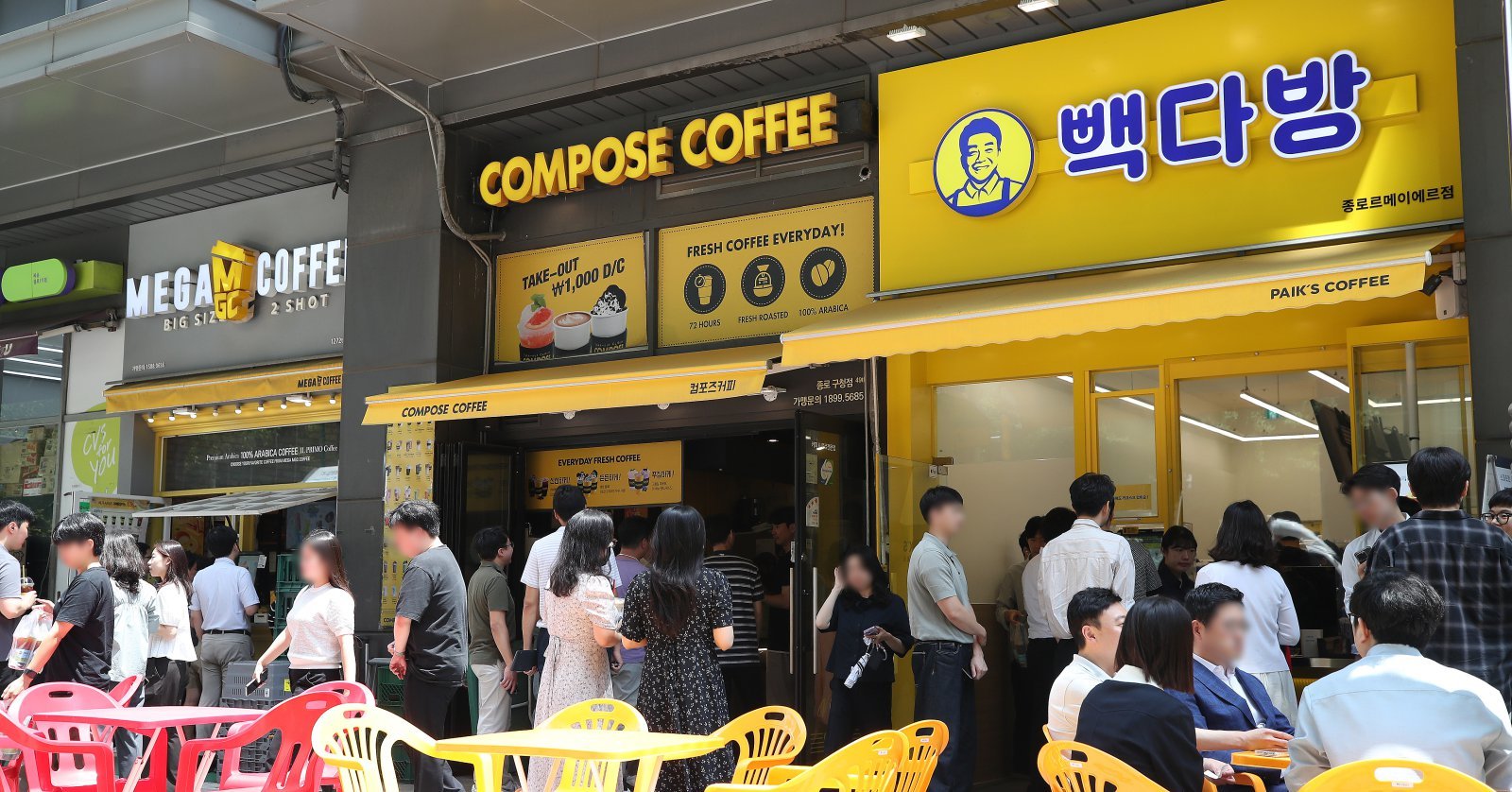
Even budget coffee prices are rising in South Korea amid cost pressures
Translated from Korean, summarized and contextualized by DistantNews.
At a glance
News
Named sources
Context piece
- Even budget coffee franchises in South Korea are raising prices due to rising costs of beans, exchange rates, logistics, and labor.
- Several popular low-cost brands, including Mammoth Coffee, Mega MGC Coffee, Compose Coffee, and Paik's Coffee, have announced price increases.
- The trend is expected to continue as brands struggle to absorb escalating operational expenses.
The era of affordable coffee is fading in South Korea as even budget-friendly franchises are implementing price hikes. Rising operational costs, including raw bean prices, currency fluctuations, logistics, and labor, are forcing these brands, once known for their value, to pass on the expenses to consumers.
Mammoth Coffee is the latest to announce an increase, with its small iced Americano rising from 1,200 won to 1,400 won (a 16.7% jump). Medium sizes will also see a 12.5% increase. This follows similar moves by other major budget coffee chains. Mega MGC Coffee increased prices on three drinks in June, while Compose Coffee raised its signature iced Americano price from 1,500 won to 1,800 won in February. Paik's Coffee also implemented a roughly 5% increase on key beverages earlier this year.
Low-cost coffee brands' price increase trend is expected to continue for the time being.
Other brands like The Venti have adjusted prices on most drinks (excluding Americano) by 100 to 500 won since late May. Even Baanapresso and Brewda Coffee increased prices on select items like decaf and cold brew in March. This widespread trend indicates that the entire low-cost coffee sector is feeling the pressure.
Industry insiders attribute the price hikes to a "triple whammy" of rising costs. International coffee bean prices have climbed significantly over the past three months, with Arabica prices increasing by 15.25%. The geopolitical tensions in the Strait of Hormuz have also driven up international oil prices, leading to higher shipping and transportation costs for imported raw materials. Furthermore, the projected increase in the minimum wage for next year, up 3.7% to 10,700 won per hour, will directly impact labor costs for franchise owners. Coffee brands, which rely heavily on a franchise model, find it increasingly difficult to maintain their previous pricing strategies.
Low-cost coffee brands have absorbed cost burdens as much as possible on their own, as price competitiveness is the most important factor. However, in a situation where bean prices, exchange rates, logistics costs, and labor costs are all rising simultaneously, it is no longer possible to maintain the existing prices.
DistantNews Editorial
Originally published by Dong-A Ilbo in Korean. Translated, summarized, and contextualized by our editorial team with added local perspective. Read our editorial standards.
More Stories



From Our Blog

What Gets Lost (and Found) When News Is Translated

The Critical Role of Diaspora Media in Global News

What Travellers Should Know About Countries with Restricted Press

A Digital Nomad's Guide to Following Local News

How the Same Story Looks Different in Different Countries
