


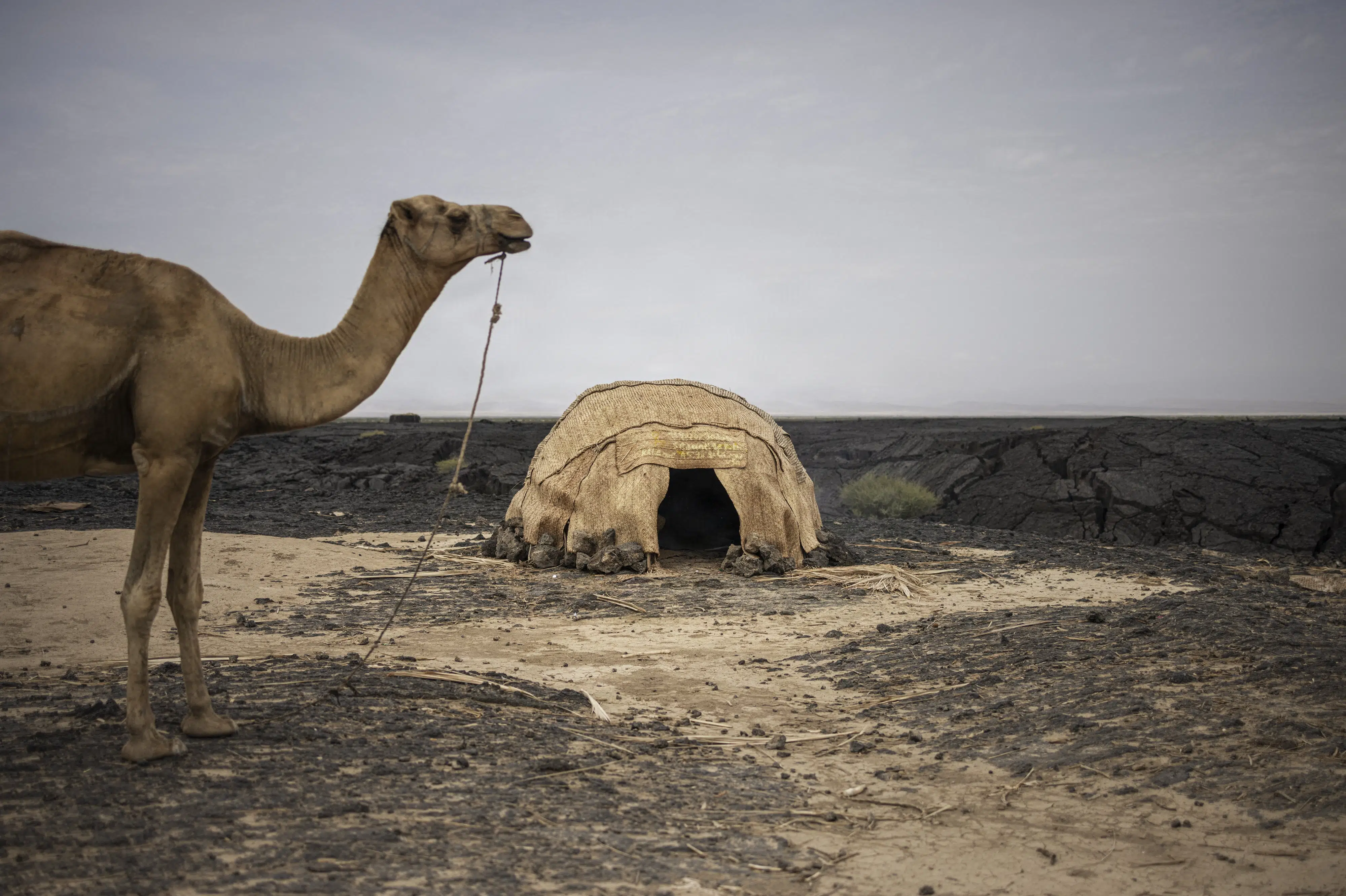
Even camels succumb as extreme heat grips Africa
Translated from Danish, summarized and contextualized by DistantNews.
At a glance
News
Named sources
Context piece
- Camels, traditionally known for their resilience in harsh desert environments, are increasingly suffering from extreme heat in Africa due to climate change.
- Studies indicate that heat stress leads to more diseases, poorer reproduction, and higher mortality rates in camels.
- Camel herders report visible signs of suffering, including foot blisters and eye irritation, with some losing young camels to the heat.
Camels, long hailed as "ships of the desert" for their ability to withstand arid conditions, are now buckling under the extreme heat gripping Africa. Climate change is exacerbating temperatures, leading to significant health issues for these resilient animals.
Recent research, particularly from Ethiopia, highlights that heat stress is causing a rise in diseases, reduced reproductive success, and increased mortality among camels. Ali Umer, a camel herder from Ethiopia's Afar region, shared his observations with the BBC, stating his camels "suffer from the extreme heat."
Umer described visible signs of distress, including "blisters on their feet, their eyes run, and the hot sand burns their skin and wears off their fur when they lie down." He reported losing eight young camels to the heat within the past month, despite owning over 500.
North Africa and the Horn of Africa are home to approximately 80 percent of the world's one-humped camels, known as dromedaries. Studies, including one from southern Ethiopia based on interviews with herders, show that rising temperatures and climate instability are harming camel populations.
In Somalia, a June study revealed that drought-related camel mortality has become a widespread crisis, affecting nearly 46 percent of households with camels. The World Meteorological Organization notes that parts of Africa are warming faster than the global average, leading to more extreme weather events like droughts and heatwaves.
They get blisters on their feet, their eyes run, and the hot sand burns their skin and wears off their fur when they lie down.
DistantNews Editorial
Originally published by Berlingske in Danish. Translated, summarized, and contextualized by our editorial team with added local perspective. Read our editorial standards.
More Stories



From Our Blog

What Gets Lost (and Found) When News Is Translated

The Critical Role of Diaspora Media in Global News

What Travellers Should Know About Countries with Restricted Press

A Digital Nomad's Guide to Following Local News

How the Same Story Looks Different in Different Countries
