


Even liberal arts students can become AI talent: Telecoms cultivate AI workforce
Translated from Korean, summarized and contextualized by DistantNews.
At a glance
News
Sources not specified
Context piece
- South Korean telecommunications companies are investing in cultivating AI talent through specialized training programs like KT's A.School.
- These programs aim to equip individuals, including those from non-technical backgrounds, with practical AI skills for business applications.
- The initiative reflects a broader industry trend to address the growing demand for AI expertise as companies undergo digital transformation.
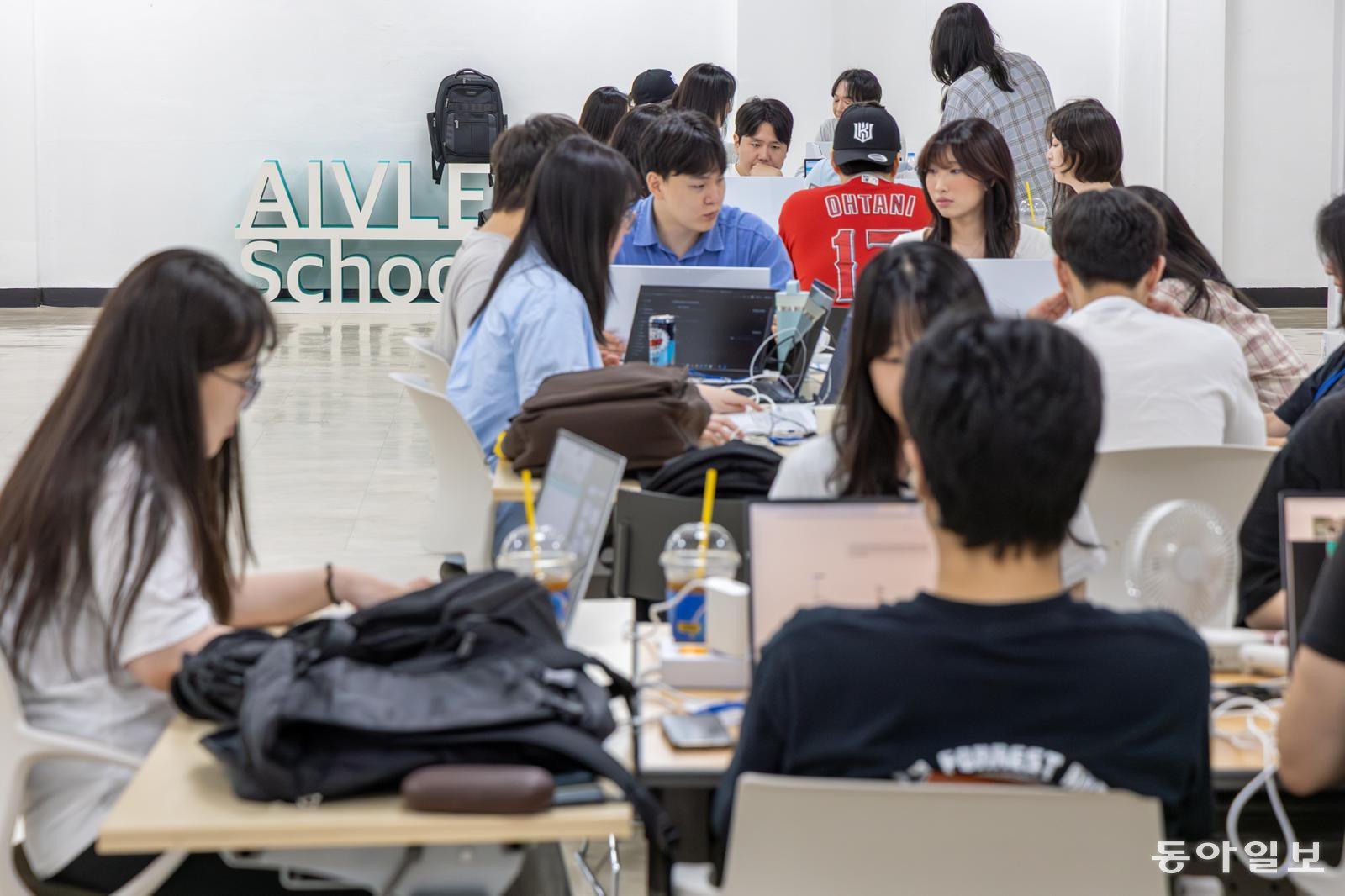
South Korean telecommunications giants are actively nurturing a new generation of AI talent, recognizing the critical role of artificial intelligence in their future business strategies. KT's A.School, a joint initiative with the Ministry of Employment and Labor, exemplifies this commitment. The program, which has trained approximately 3,500 individuals since 2021, focuses on practical, hands-on learning in AI service planning, data analysis, and cloud-based service implementation.
Seeing that even the professor evaluated the AI-translated results as better in the translation class made me rethink my career path.
Participants, like 24-year-old Ban Jae-hyuk, a former translation student, are shifting their career paths to embrace AI. Ban found inspiration after witnessing AI's superior translation capabilities and enrolled in A.School to develop AI application skills. The program's emphasis on project-based learning, with significant time dedicated to team projects and mentorship from industry professionals, prepares graduates to be immediately effective in corporate environments. KT notes that A.School alumni are often perceived as having two to three years of work experience due to their practical understanding.
There's an evaluation within the company that graduates from A.School 'understand work as if they have 2-3 years of company experience'.
This trend extends across the industry. SK Telecom launched its 'ALEPH' program in June to train AI security and network specialists, offering practical training in realistic corporate settings. LG Uplus has partnered with Soongsil University to offer a cybersecurity degree program with job placement guarantees. These efforts underscore a strategic move by telecom companies to transition from traditional communication services to AI-centric businesses, ensuring a pipeline of skilled workers capable of driving this transformation.
We felt that knowing the technology and actually doing the work are different things. Through the project, we developed the sense to define problems and implement solutions.
The surge in demand for AI skills is evident in the high application rates for these programs. The latest A.School recruitment saw over 1,000 applicants for 10기, with 60% coming from non-IT or non-engineering backgrounds. This highlights a growing recognition that AI and AI transformation (AX) competencies are becoming essential across a wide range of disciplines, not just for traditional tech professionals. The companies aim to cultivate talent that can immediately contribute to their evolving business landscapes.
The proportion of applicants from non-related majors exceeding half shows the trend that AI or AX capabilities are not just necessary for developers or related majors, but are spreading to various majors and job roles.
DistantNews Editorial
Originally published by Dong-A Ilbo in Korean. Translated, summarized, and contextualized by our editorial team with added local perspective. Read our editorial standards.
More Stories


From Our Blog

What Gets Lost (and Found) When News Is Translated

The Critical Role of Diaspora Media in Global News

What Travellers Should Know About Countries with Restricted Press

A Digital Nomad's Guide to Following Local News

How the Same Story Looks Different in Different Countries
