


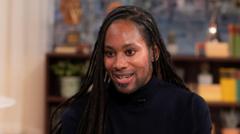
Ex-Cambridge Professor at Center of Plagiarism Row Found Dead
Translated from English, summarized and contextualized by DistantNews.
At a glance
News
Sources not specified
Context piece
- Former Cambridge professor Jason Arday, embroiled in a plagiarism row, has been found dead.
- Police are treating the death as unexpected but not suspicious.
- Arday resigned last week, denying plagiarism claims but admitting errors, citing the personal toll of public scrutiny.
Jason Arday, a former professor at the University of Cambridge, has died. Emergency services found the 41-year-old unresponsive at a south London address on Friday afternoon. The Metropolitan Police confirmed his death is being treated as unexpected but not suspicious, and his next of kin have been informed.
At this time his death is being treated as unexpected, but is not believed to be suspicious.
Arday resigned from his position as a professor of the sociology of education at Cambridge last week. His departure followed allegations of plagiarism and questions surrounding some of his academic achievements. He had consistently denied the plagiarism claims but acknowledged errors in his published work. In his resignation statement, Arday stated that the "unrelenting level of public scrutiny and personal attack" had become too much.
While criticism is an inevitable part of academic life, what I have experienced has gone far beyond scholarly disagreement. The relentless accusations, speculation and public commentary have taken a profound toll on me and on those I love.
The controversy initially surfaced after another academic, Nathan Cofnas, claimed to have found numerous instances of plagiarism in Arday's work. Arday's appointment in 2023 as Cambridge's youngest Black professor was initially celebrated as a significant progressive moment. While some critics suggested racism influenced the treatment he received, others maintained the plagiarism accusations were valid. Arday emphasized that his resignation should not be seen as an admission of guilt regarding the surrounding narratives.
His resignation should not be mistaken for an acceptance of the narratives that have surrounded me.
DistantNews Editorial
Originally published by BBC News in English. Translated, summarized, and contextualized by our editorial team with added local perspective. Read our editorial standards.
More Stories



From Our Blog

What Gets Lost (and Found) When News Is Translated

The Critical Role of Diaspora Media in Global News

What Travellers Should Know About Countries with Restricted Press

A Digital Nomad's Guide to Following Local News

How the Same Story Looks Different in Different Countries
