

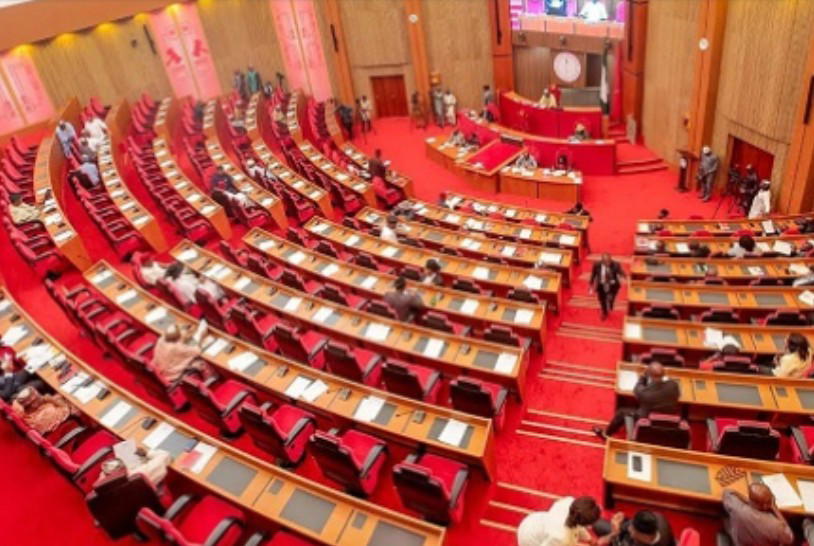

Ex-gen Olukolade backs state police, warns against delays, govs abuse
Summarized and contextualized by DistantNews.
At a glance
News
Named sources
Context piece
- Nigeria faces significant risks to its economic stability, national unity, and democratic governance due to worsening insecurity, inflation, and ethno-religious divisions, according to a new report.
- The Centre for Crisis Communication's report highlights a deterioration in the security and information environment, marked by persistent terrorism, mass kidnappings, and sophisticated disinformation campaigns.
- Retired Maj. Gen. Chris Olukolade warned that criminal groups are adapting tactics and that economic hardship exacerbates public frustration, underscoring the need for more robust security responses.
Nigeria's economic stability, national unity, and democratic governance are under severe threat from a convergence of escalating insecurity, persistent inflation, and rising ethno-religious divisions. This stark warning comes from the Centre for Crisis Communication's Second Quarter 2026 National Security and Stability Report, presented in Abuja by its chairman, retired Maj. Gen. Chris Olukolade.
The Centre expresses deep concern over the convergence of escalating insecurity, widespread disinformation, severe economic hardship, and intensifying ethno-religious polarisation, a combination that poses significant risks to national stability and social cohesion.
The report details a marked deterioration in the country's security and information landscape, particularly during June 2026. It identifies persistent terrorist attacks, mass kidnappings, violent banditry, farmer-herder clashes, and the resurgence of extremist elements as key security challenges. Furthermore, the report notes the growing use of artificial intelligence-driven disinformation and coordinated misinformation campaigns, which complicate security operations and undermine public confidence in state institutions.
While acknowledging the commendable efforts and operational successes recorded by the Armed Forces of Nigeria and other security agencies, particularly in the rescue of abducted persons and the disruption of terrorist activities, the Centre notes that criminal groups continue to evolve and adapt their tactics.
While acknowledging the efforts of the armed forces and security agencies in rescuing victims and disrupting criminal activities, Olukolade stressed that criminal groups continue to adapt their tactics. He emphasized the urgent need for more robust, coordinated, and intelligence-driven responses across all security formations. The retired general also linked the security challenges directly to economic hardship, warning that worsening inflation and food insecurity are fueling public frustration and increasing social vulnerabilities.
The Centre further observes that worsening economic conditions, rising food insecurity and persistent inflation continue to exacerbate public frustration and heighten social vulnerabilities.
Olukolade expressed deep concern over the unprecedented proliferation of fake news, manipulated multimedia content, and AI-generated disinformation. These elements, he stated, are capable of undermining public trust in state institutions, aggravating social tensions, and complicating ongoing security operations. The report's findings underscore the complex and interconnected nature of the challenges facing Nigeria, demanding comprehensive and adaptive strategies to ensure national stability and social cohesion.
Nigeria is experiencing an unprecedented proliferation of fake news, manipulated multimedia content, AI-generated disinformation and inflammatory narratives capable of undermining public confidence in state institutions.
DistantNews Editorial
Originally published by The Punch. Summarized and contextualized by our editorial team with added local perspective. Read our editorial standards.
More Stories


From Our Blog

How the Same Story Looks Different in Different Countries

What Gets Lost (and Found) When News Is Translated

The Critical Role of Diaspora Media in Global News

What Travellers Should Know About Countries with Restricted Press

A Digital Nomad's Guide to Following Local News
