

Ex-Minister Steinbrück proposes moderating AfD with 'red lines'
Translated from German, summarized and contextualized by DistantNews.
At a glance
News
Named sources
Context piece
- Former German Finance Minister Peer Steinbrück proposes a new strategy to moderate the AfD party.
- He suggests defining "red lines" for dialogue while maintaining a necessary "firewall."
- Steinbrück opposes a ban on the AfD, arguing it would not eliminate voters and could alienate potential supporters.
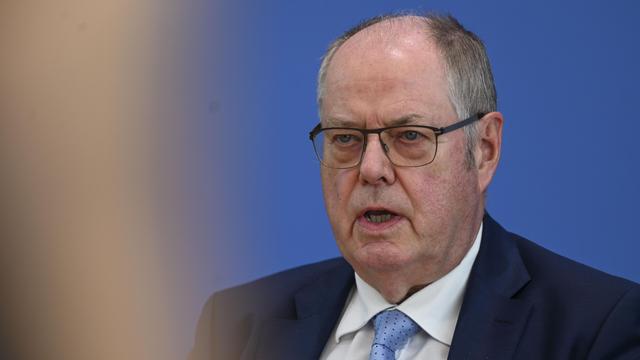
Former German Finance Minister Peer Steinbrück has put forward a novel approach to engage with the Alternative for Germany (AfD) party, aiming to moderate its positions. Steinbrück, a member of the Social Democratic Party (SPD), suggested in a podcast that political actors should establish clear "red lines" within which they would be open to dialogue.
The firewall against the AfD is necessary for the foreseeable future.
However, he stressed that any cooperation or tolerance would be impossible if the AfD crosses these boundaries. Steinbrück maintained that the "firewall" against the AfD remains necessary for the foreseeable future. His proposal echoes ideas from historian Andreas Rödder, who previously advocated for a "conditional willingness to talk beyond the firewall."
Steinbrück specifically rejected the idea of banning the AfD, arguing that such a move would not make its voters disappear. Instead, he believes it could alienate voters whom the SPD might otherwise win back. He also pointed to the difficulty of enforcing a ban through the Federal Constitutional Court, warning of catastrophic consequences should such an attempt fail.
Voters do not disappear because of a ban.
As an alternative to a party ban, Steinbrück proposed revoking the passive electoral rights of certain AfD representatives, citing Thuringia's AfD leader Björn Höcke as an example. He noted that the German Constitution allows for the forfeiture of certain rights if they are misused to fight the liberal democratic order, with the Federal Constitutional Court having jurisdiction over such cases.
I believe there is enough material to make it clear that Mr. Höcke is a spiritual child who has nothing to do with the foundations of our constitution.
DistantNews Editorial
Originally published by Die Zeit in German. Translated, summarized, and contextualized by our editorial team with added local perspective. Read our editorial standards.
More Stories


From Our Blog

What Gets Lost (and Found) When News Is Translated

How the Same Story Looks Different in Different Countries

The Critical Role of Diaspora Media in Global News

What Travellers Should Know About Countries with Restricted Press

A Digital Nomad's Guide to Following Local News
