


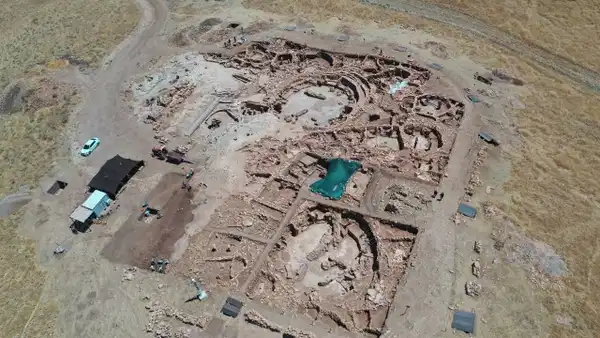
Excavations Begin at Karahantepe, Contemporary of Göbeklitepe; Structure to be Unearthed for First Time
Translated from Turkish, summarized and contextualized by DistantNews.
At a glance
News
Sources not specified
Ongoing story
- Excavations have begun at Karahantepe, a site contemporary with Göbeklitepe, as part of the Taş Tepeler Project.
- This season's work will focus on a four-sided structure partially unearthed last year, with expectations of significant discoveries.
- The project aims to uncover more about the Neolithic period in southeastern Turkey.
Excavations are underway at Karahantepe, a significant archaeological site in Turkey's southeastern Şanlıurfa province. The site, considered a contemporary of the famed Göbeklitepe, is part of the broader Taş Tepeler Project. This year's focus is on a unique four-sided structure that was partially uncovered during the previous excavation season.
Archaeologists anticipate making important discoveries within this structure, which is believed to have served a special purpose. The Taş Tepeler Project, encompassing Göbeklitepe, Karahantepe, and other nearby Neolithic settlements, aims to shed light on the lives of early humans during the Pre-Pottery Neolithic period. These sites represent a crucial transition in human history, marked by the development of settled communities and monumental architecture.
The ongoing work at Karahantepe is expected to yield further insights into the social, cultural, and architectural practices of the people who inhabited the region over 11,000 years ago. The discoveries contribute to a growing understanding of the origins of civilization in Mesopotamia and the Fertile Crescent.
DistantNews Editorial
Originally published by Cumhuriyet in Turkish. Translated, summarized, and contextualized by our editorial team with added local perspective. Read our editorial standards.
More Stories

From Our Blog

What Gets Lost (and Found) When News Is Translated

The Critical Role of Diaspora Media in Global News

What Travellers Should Know About Countries with Restricted Press

A Digital Nomad's Guide to Following Local News

How the Same Story Looks Different in Different Countries
