

Exchanges, Brokerages Earn $85 Million in Fees From Single-Stock Leveraged ETFs
Translated from Korean, summarized and contextualized by DistantNews.
At a glance
News
Official statement
New plan
- Brokerages and exchanges earned 120 billion won in fees over two months from single-stock leveraged ETFs.
- These fees were generated from transactions involving ETFs tracking Samsung Electronics and SK Hynix.
- A lawmaker raised concerns about the high-risk exposure for individual investors while exchanges and firms profited.
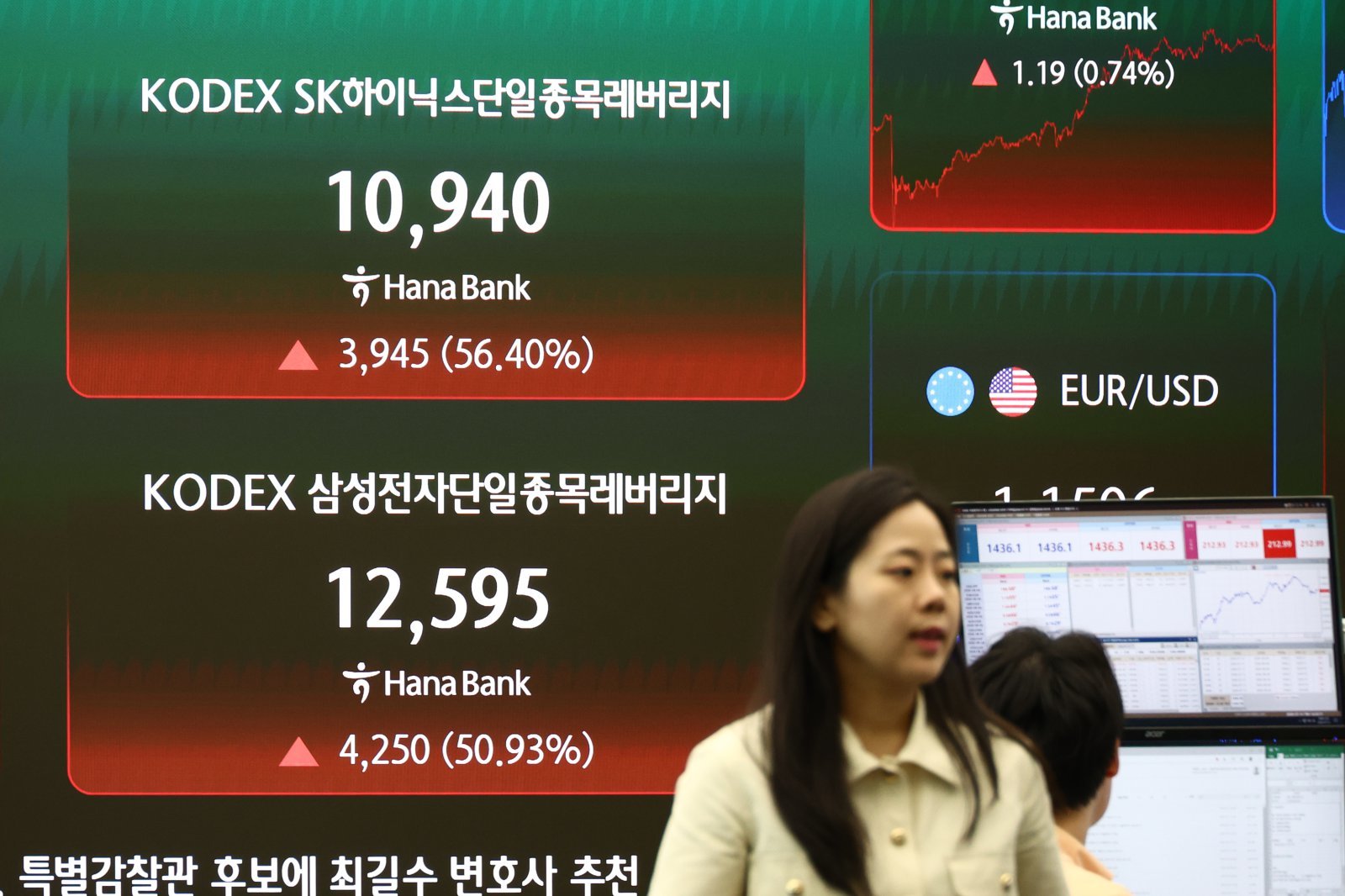
South Korean brokerages and stock exchanges have generated substantial revenue from single-stock leveraged Exchange Traded Funds (ETFs). Since the launch of these high-risk investment products in May, the combined fee income for exchanges and securities firms has reached approximately 117.2 billion won (about $85 million USD) by the end of July.
The majority of these earnings, 89.3 billion won, came from brokerage commissions on the trading of leveraged and inverse ETFs linked to Samsung Electronics and SK Hynix. The Korea Exchange (KRX) also collected 27.9 billion won in transaction and clearing fees.
Individual investors are exposed to investment risk, but not only securities firms but also the exchange have earned hundreds of billions of won in fees.
Park Seong-hoon, a member of the National Assembly's Political Affairs Committee, criticized the situation. He pointed out that while individual investors were exposed to significant risks, both securities firms and the KRX profited handsomely. Park questioned whether the exchange fulfilled its role as a market supervisor while individuals were taking on such high-risk investments.
Additionally, the Korea Financial Investment Association, responsible for mandatory pre-investment education, has also seen considerable income. With nearly 800,000 individuals applying for the course and over 740,000 completing it, the association has collected around 3.2 billion won in course fees. Trading these single-stock leveraged ETFs requires completion of this mandatory education.
It is necessary to check whether the exchange has properly fulfilled its role as a market supervisor while individuals are exposed to high risk.
DistantNews Editorial
Originally published by Dong-A Ilbo in Korean. Translated, summarized, and contextualized by our editorial team with added local perspective. Read our editorial standards.
More Stories


From Our Blog

What Gets Lost (and Found) When News Is Translated

The Critical Role of Diaspora Media in Global News

What Travellers Should Know About Countries with Restricted Press

A Digital Nomad's Guide to Following Local News

How the Same Story Looks Different in Different Countries
