


Expert Warns of Eastern Europe's Abandonment if Extremist Wins French Presidency
Translated from Romanian and summarized by DistantNews. Read the original for the full story.
At a glance
Analysis
Named sources
Context piece
- Political scientist Sergiu Mișcoiu warns that an extremist victory in the 2027 French presidential elections could severely impact Romania and the EU.
- Recent polls indicate Marine Le Pen has a strong chance of winning, potentially facing far-left leader Jean-Luc Melenchon.
- Mișcoiu attributes the rise of extremism in France to public reaction against over a decade of centrist, liberal policies with significant social costs.
Political scientist Sergiu Mișcoiu warns that an extremist victory in the upcoming 2027 French presidential elections poses significant risks, potentially leading to the abandonment of Eastern Europe. Mișcoiu, a professor at Babeș-Bolyai University and Paris-Est Créteil University, expressed concern that a far-right or far-left leader in Paris could dramatically alter Romania's and the European Union's geopolitical standing.
I would say that in France we have a situation that does not differ much from situations in other European countries, in the sense that we have a government that is rather centrist and has been there at least since 2017.
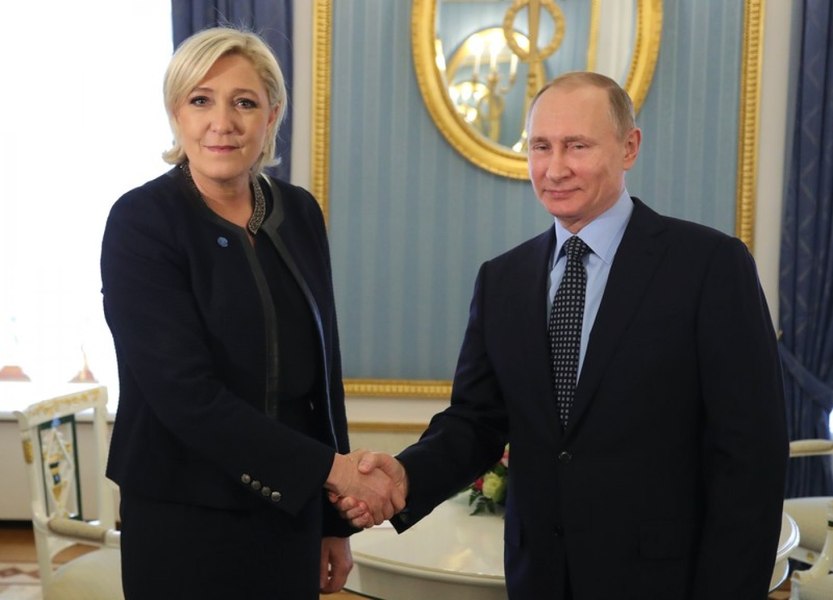
Recent polls suggest Marine Le Pen of the far-right National Rally has a strong lead and is likely to win, regardless of her opponent in the second round. The same surveys indicate her most probable challenger is Jean-Luc Melenchon, leader of the radical left. Mișcoiu notes that Le Pen is considered among the more moderate candidates within the far-right spectrum.
Mișcoiu explains that the current political climate in France mirrors trends seen elsewhere in Europe, characterized by a public backlash against centrist governance. He points to over a decade of centrist administrations since 2014, which, while maintaining France's international competitiveness through liberal policies, have incurred substantial social costs. This has fueled anti-center sentiment, largely benefiting the far-right, represented by Le Pen, and the radical left.
Therefore, all in all, for more than 12 years, we can say that we have had centrist governments, with a mix of social policies, but especially with liberal policies, which have certainly kept France in a zone of international competitiveness, but which have had quite significant social costs.
The expert highlighted that the French Socialist Party, traditionally a center-left alternative, has struggled to define its position, further contributing to the polarization. Mișcoiu's analysis suggests that the French electorate's dissatisfaction with moderate policies has created fertile ground for extremist platforms, raising concerns about the future direction of French and European politics.
That is why we have an anti-center reaction from a large part of French society, and this reflex has continued and developed in the far-right direction, where, of course, we have Marine Le Pen, who is very visible.
About this summary
Originally published by Adevărul in Romanian. Translated, summarized, and contextualized automatically by DistantNews, with a note on how the source frames the story. Not individually reviewed before publishing. How this works.
More Stories


From Our Blog

What Gets Lost (and Found) When News Is Translated

The Critical Role of Diaspora Media in Global News

What Travellers Should Know About Countries with Restricted Press

A Digital Nomad's Guide to Following Local News

How the Same Story Looks Different in Different Countries
