


Experts Doubt Military Testosterone Screening Will Boost Combat Performance, Warn of Health Risks
Translated from English, summarized and contextualized by DistantNews.
At a glance
News
Named sources
New plan
- U.S. Defense Secretary Pete Hegseth proposed mandatory testosterone screening for military personnel aged 30 and above.
- Experts question the proposal, citing little evidence of improved combat performance and warning of potential health risks from optional hormone replacement therapy.
- Concerns include side effects like suppressed natural testosterone production and reduced sperm count, particularly for younger service members.
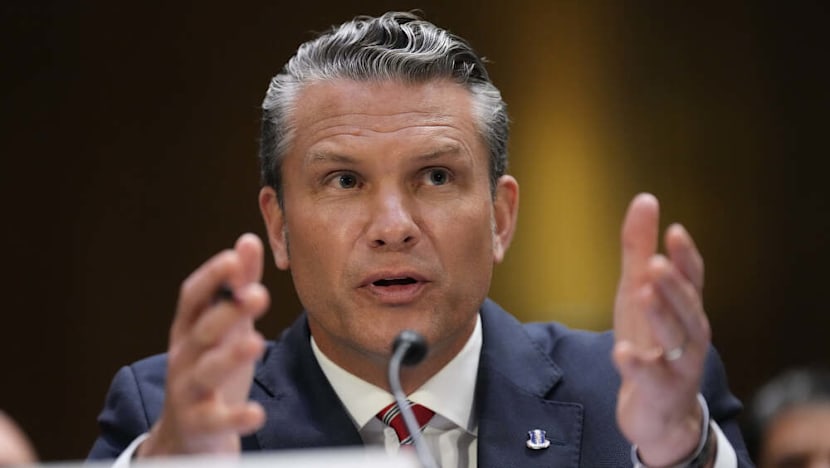
Medical experts are raising concerns about U.S. Defense Secretary Pete Hegseth's proposal for mandatory testosterone screening across the military, questioning its effectiveness in improving combat performance and warning of potential health risks.
I'm authorizing a new screening program for testosterone deficiency for our service members, ensuring you have the right testosterone levels to perform at your absolute best.
Hegseth announced plans last month for a "High-T Department of War," arguing that screening service members for testosterone deficiency would enhance the U.S. military's "lethality." The proposed program would screen military personnel aged 30 and older. Those found to have low testosterone levels would be offered optional replacement therapy.
Testosterone, the primary male sex hormone, plays a role in regulating muscle mass and bone density. Hegseth stated the initiative aims to "restore and optimize natural capabilities" rather than provide "artificial enhancement." However, medical professionals are skeptical about the benefits at the doses typically used for replacement therapy.
It does increase muscle mass, particularly at high doses. There’s very little change at what we would call replacement doses.
Adrian Dobs, a professor at Johns Hopkins University School of Medicine, noted that while testosterone can increase muscle mass at high doses, "replacement doses" show minimal change. He added, "We don't fight that way anymore. It's not like we have soldiers that go off and they have swords and where muscle mass is the real big determinant."
But we don't fight that way anymore. It's not like we have soldiers that go off and they have swords and where muscle mass is the real big determinant.
Experts also caution that testosterone therapy carries significant side effects. Dobs highlighted that it suppresses a man's own testosterone production and can lower sperm counts, which he considers undesirable, especially for young men of reproductive age. The Endocrine Society advises against routine testing for low testosterone in asymptomatic men, warning of potential unnecessary long-term treatment.
One of the clear problems with taking testosterone is that it suppresses the man's own testosterone. So it suppresses their level and it suppresses their sperm counts. I think in young men, who are basically sort of at the prime of reproduction, causing a drop in sperm count is not really what we as a society would want.
DistantNews Editorial
Originally published by CNA in English. Translated, summarized, and contextualized by our editorial team with added local perspective. Read our editorial standards.
More Stories



From Our Blog

What Gets Lost (and Found) When News Is Translated

The Critical Role of Diaspora Media in Global News

What Travellers Should Know About Countries with Restricted Press

A Digital Nomad's Guide to Following Local News

How the Same Story Looks Different in Different Countries
