


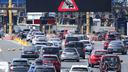
Experts Offer Simple Tips for Fuel Savings Amid High Prices
Translated from Croatian, summarized and contextualized by DistantNews.
At a glance
News
Sources not specified
Context piece
- High fuel prices are burdening German drivers, prompting expert advice on reducing consumption.
- Experts recommend vehicle checks like removing roof racks and checking tire pressure, along with mindful driving techniques.
- Simple adjustments to driving style and vehicle preparation can lead to a 5-10% fuel saving.
With fuel prices soaring, German drivers are seeking ways to cut costs, and experts are offering practical solutions. Alexander Kreipl, an eco-coach for ADAC, has outlined a two-phase approach to lower fuel consumption.
Even before setting off on a journey, it is important to create the right conditions for lower fuel consumption.
Before even starting a journey, Kreipl advises drivers to optimize their vehicle's readiness for efficiency. This includes removing external accessories like roof racks and ski carriers, which increase aerodynamic drag. He also stresses the importance of decluttering the trunk, as excess weight significantly boosts fuel usage. Checking tire pressure is another crucial step; inflating tires to 0.2 bar above the manufacturer's recommendation can reduce rolling resistance and thus fuel consumption.
Drive at low revs and anticipate traffic. That is key. If you see a red light, let it roll. And always look far ahead at the traffic situation.
The second phase involves a test drive over approximately 75 kilometers, encompassing city streets, country roads, and highways. Kreipl emphasizes driving at low RPMs and anticipating traffic flow. "If you see a red light, let it roll," he suggests, encouraging drivers to look far ahead to anticipate traffic situations. Initial tests showed a consumption of 6.1 liters per 100 kilometers, with room for improvement.
There are still a few things we could improve. Driving a little more proactively, braking earlier, and using the accelerator less when accelerating, there is still potential. And then we would, of course, have to switch the sports mode to eco mode.
Further adjustments, such as a more proactive driving style, earlier braking, and less aggressive acceleration, can yield better results. Switching the car's driving mode to 'Eco' also plays a role. While traffic jams during a second test drive disrupted a perfectly smooth style, Kreipl estimates that these combined changes, including driving style modifications, achieved a fuel saving of five to ten percent. The advice was featured in a March 25, 2026, broadcast of Bavaria's "Abendschau."
Due to the changes, including the driving style, I would say that we have definitely achieved fuel savings of five to ten percent.
DistantNews Editorial
Originally published by Večernji List in Croatian. Translated, summarized, and contextualized by our editorial team with added local perspective. Read our editorial standards.
More Stories



From Our Blog

What Gets Lost (and Found) When News Is Translated

The Critical Role of Diaspora Media in Global News

What Travellers Should Know About Countries with Restricted Press

A Digital Nomad's Guide to Following Local News

How the Same Story Looks Different in Different Countries
