


Experts slam South Korea's 'tactical annihilation' and lack of urgency in World Cup exit
Translated from Korean, summarized and contextualized by DistantNews.
At a glance
News
Named sources
Context piece
- South Korea lost their final 2026 World Cup group match 1-0 to South Africa, with analysts criticizing the team's tactics and lack of urgency.
- Experts pointed to poor build-up play, predictable tactics, and questionable substitutions by coach Hong Myung-bo as key reasons for the defeat.
- The loss highlighted a perceived lack of desperation and organized play from the South Korean team, even when facing elimination.
South Korea's final group stage match in the 2026 World Cup ended in a disappointing 1-0 loss to South Africa, a result that drew sharp criticism from football analysts regarding the team's tactical approach and overall performance.
It was a tactical annihilation.
Experts described the defeat as a "tactical annihilation," citing frequent passing errors that disrupted build-up play and provided South Africa with numerous counter-attack opportunities. Analysts noted a lack of fluid passing from the midfield to break South Africa's press and an excessive gap between defensive lines in the latter half of the game, which allowed South Africa's quick transitions to exploit space.
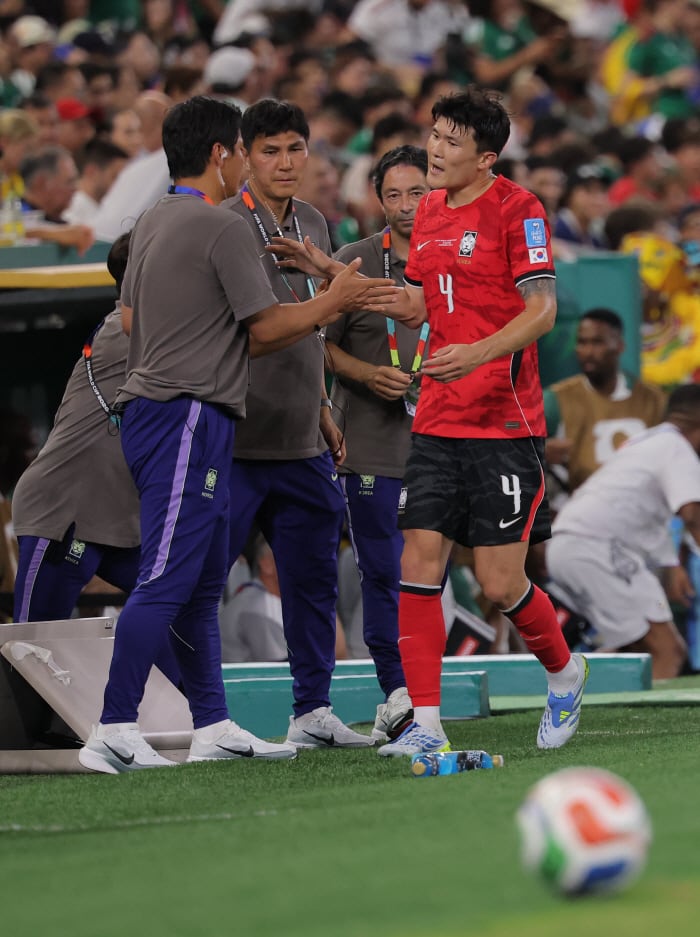
Coach Hong Myung-bo's substitution strategy also came under fire. Replacing defender Kim Min-jae with Park Jin-seop after falling behind was seen as a critical error, failing to increase attacking numbers. The decision to bring on Cho Gue-sung for a simpler attacking approach was also questioned, as the number of attackers in the box remained insufficient. Furthermore, starting Son Heung-min and Lee Jae-sung as substitutes, particularly benching Lee Jae-seong for his pressing, tackling, and build-up abilities, was deemed a "worst choice."
South Africa perfectly analyzed and predicted Korea's playing style, preparing a game plan centered on quick transitions between offense and defense.
Another anonymous analyst expressed strong disappointment with the team's lack of urgency and organized play, especially in the crucial final 10-15 minutes. Despite facing elimination, the team's activity level was perceived as low, with no apparent pre-planned plays. Players appeared to hesitate after receiving the ball, and teammates failed to make supporting runs, leading to ineffective play. The analyst suggested that even a riskier offensive substitution, like bringing on Oh Hyun-gyu alongside Cho Gue-sung, might have been necessary to secure a win.
When we needed to increase our attacking force after falling behind, we substituted defender Park Jin-seop for Kim Min-jae, who had a calf injury. This was the worst possible move, as it didn't increase our attacking numbers while maintaining defensive numbers.
Commentator Kim Dae-gil observed that the team's "energy cycle was at its lowest," suggesting players appeared physically strained. He attributed this to the team focusing all its energy on qualifying from the group stage, unlike stronger teams that set higher objectives. South Korea, ranked 25th by FIFA, was expected to defeat 60th-ranked South Africa, making the loss and subsequent group stage exit a significant underperformance.
The decision to start without Son Heung-min and Lee Jae-seong is incomprehensible. Especially removing Lee Jae-seong, who possesses excellent pressing, dribbling, and build-up abilities, was the worst choice.
DistantNews Editorial
Originally published by Hankyoreh in Korean. Translated, summarized, and contextualized by our editorial team with added local perspective. Read our editorial standards.
More Stories
From Our Blog

What Gets Lost (and Found) When News Is Translated

The Critical Role of Diaspora Media in Global News

What Travellers Should Know About Countries with Restricted Press

A Digital Nomad's Guide to Following Local News

How the Same Story Looks Different in Different Countries
